
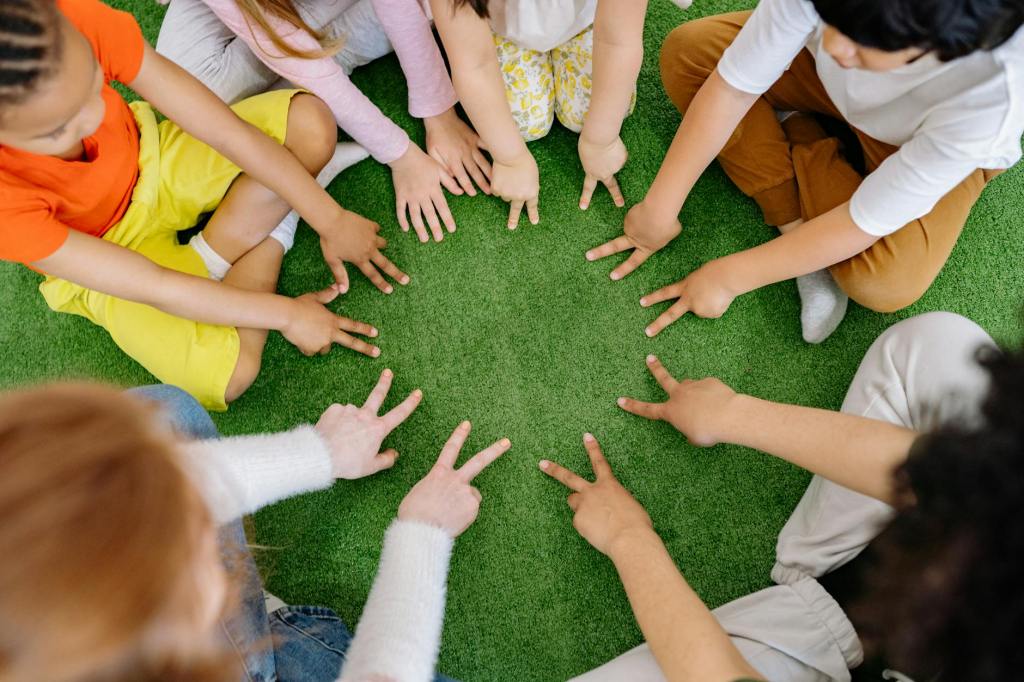
Play isn’t just fun — it’s serious business for kids! From chasing bubbles to building blanket forts, every giggle and tumble helps little brains grow big ideas. When children engage in fun games and activities, they’re not just having a blast — they’re learning to think, move, share, solve problems, and build confidence. Play also sparks imagination, strengthens tiny muscles, and fosters friendships. Whether it’s a family game night or a backyard adventure, indoor and outdoor games for kids are essential for growth, connection, and joy.
But let’s be real — some days, your energy runs out and your child’s “Can we play?” feels like the ultimate challenge. You’ve offered every game you know, and somehow everything seems “boring.” If you’ve ever hidden in the bathroom for a few minutes of peace, you’re not alone! That’s why we’ve gathered easy, low-effort play ideas and fun activities for kids that actually work — even when your brain is tired and your patience is running on empty.
Indoor Games For Kids
🎲 1. Simon Says
- Age: 3+
- How to Play: One person is “Simon” and gives instructions starting with “Simon says…” Children must only follow commands that start with “Simon says.”
- Skills: Listening, attention, and following directions.
🏃 2. Freeze Dance
- Age: 3+
- How to Play: Play music and let kids dance. When the music stops, they must freeze in place. Anyone who moves is out or has to do a fun task.
- Skills: Coordination, rhythm, and self-control.
🧩 3. Treasure Hunt
- Age: 4+
- How to Play: Hide small items around the house or yard. Give clues or a simple map for kids to find the treasure.
- Skills: Problem-solving, observation, and teamwork.
🖍️ 4. Color Scavenger Hunt
- Age: 2+
- How to Play: Call out a color, and kids must find an object in that color around the room.
- Skills: Color recognition, attention, and speed.
🐾 5. Animal Charades
- Age: 4+
- How to Play: Kids take turns acting out an animal without speaking while others guess what it is.
- Skills: Imagination, communication, and social interaction.
🏀 6. Balloon Volleyball
- Age: 3+
- How to Play: Use a balloon and a string or line to create a “net.” Kids hit the balloon back and forth without letting it touch the ground.
- Skills: Coordination, motor skills, and teamwork.
✏️ 7. Drawing Relay
- Age: 5+
- How to Play: One child starts drawing something on a piece of paper. After 10 seconds, the next child continues. Keep passing until the drawing is complete.
- Skills: Creativity, teamwork, and fine motor skills.
🎨 8. Picture Jam Game
Players: 3 (can be more in larger groups, but 3 works perfectly)
Materials: Paper and crayons/markers/pencils
Time per turn: 1 minute
Steps:
- Player 1:
- Secretly shown a picture (or a simple object/scene).
- Has 1 minute to draw it from the picture.
- Player 2:
- Cannot see the original picture.
- Looks only at Player 1’s drawing.
- Has 1 minute to replicate it as best as they can.
- Player 3:
- Cannot see the original picture.
- Looks only at Player 2’s drawing.
- Has 1 minute to replicate it.
- Reveal:
- Show the original picture and all three drawings side by side.
- Laugh at the differences and see how the picture changed through the “telephone” effect!

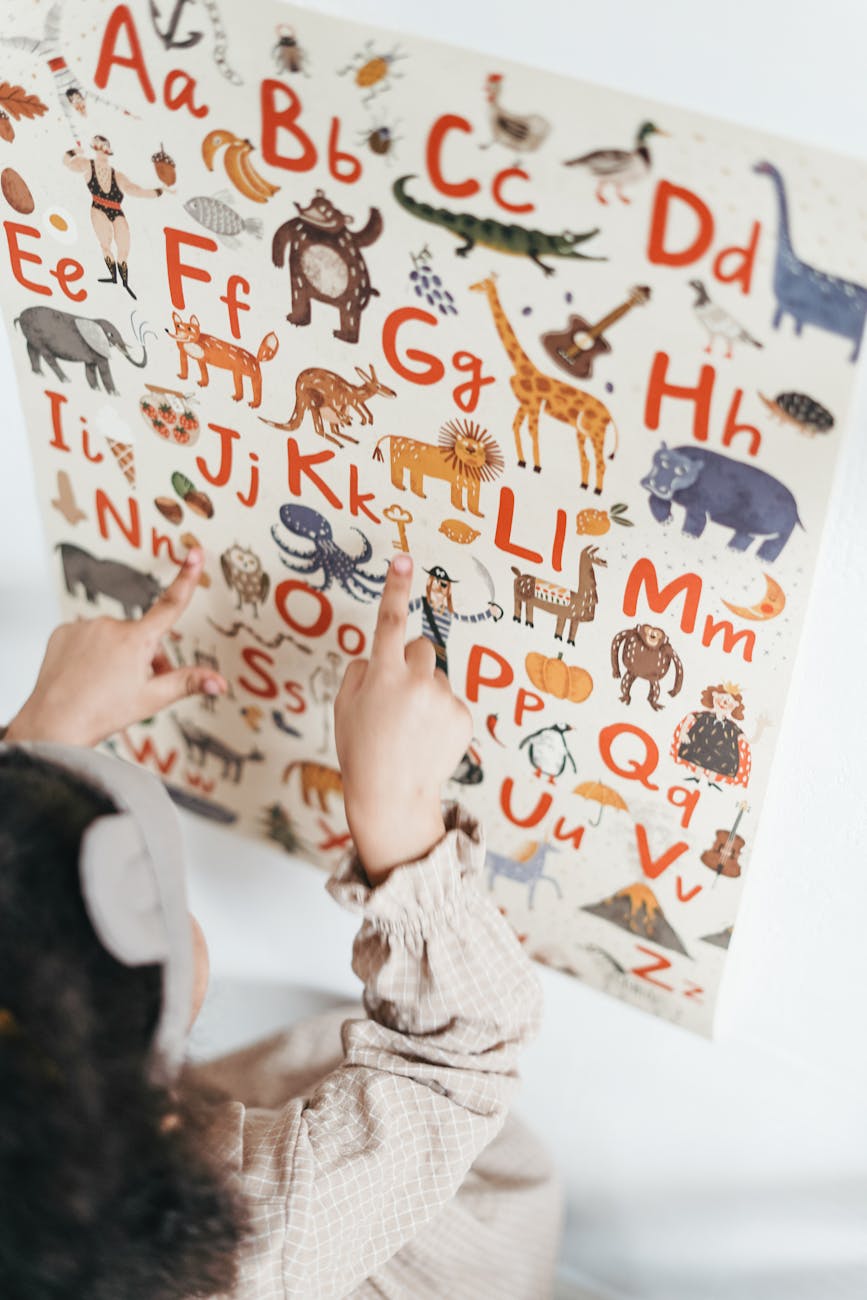
🔠 9. Alphabet Scavenger Hunt
Find objects around the house, garden, or classroom that start with each letter of the alphabet.
Players: 1 or more (can be done individually or in teams)
Materials:
- Paper or notebook
- Pencil or crayon
- Optional: Basket or bag to collect objects
How to Play:
- Set Rules:
- Each player/team has to find one object for each letter (A-Z).
- Can be real objects or drawings if the object can’t be collected.
- Start the Hunt:
- Example:
- A – Apple
- B – Ball
- C – Cup
- Players move around to find items and write or draw them.
- Example:
- Time Limit:
- Set a timer (e.g., 20–30 minutes depending on age and space).
- Scoring (Optional):
- 1 point per correctly found object
- Bonus point for creative or unusual items
- Team or player with the most points wins
- Variation for Younger Kids:
- Use only A–M for a shorter game.
- Use pictures from magazines or cards instead of real objects.
🐸 10. Pond Bank Game
Players: 4+
Materials: Chalk (for outdoors) or tape (for indoors)
Setup:
- Draw a large circle on the ground — this is the pond.
- Mark an area outside the circle as the bank.
How to Play:
- One player (or an adult) is the caller.
- Players stand around the pond (outside the circle).
- The caller shouts commands like:
- “Pond!” → Players jump inside the circle.
- “Bank!” → Players jump outside the circle.
- Players who jump the wrong place are out or get a point penalty (or just play for fun).
- Increase speed for more challenge!
Variations:
- Add animal actions: “Frog in the pond – hop inside,” “Bird on the bank – flap outside.”
- Make it musical: Play music and pause; players follow the last command.
- Use multiple ponds for more excitement.
Benefits:
- Improves listening skills
- Encourages physical activity
- Fun coordination and reflex practice

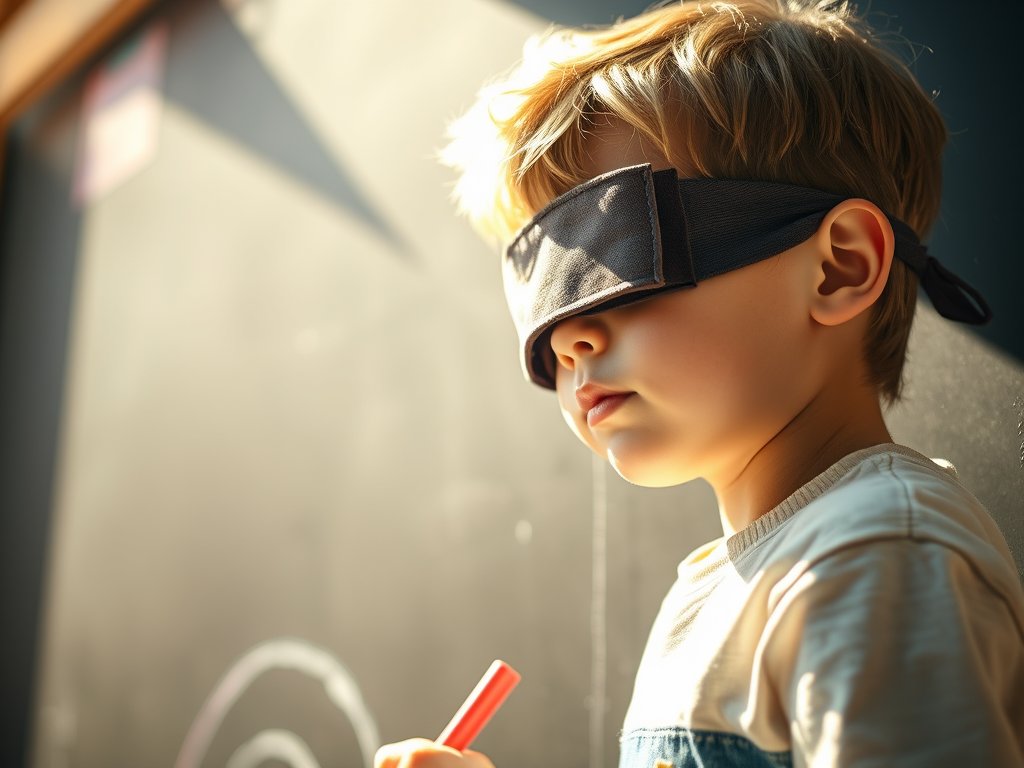
🐘 11. Pin the Tail on the Elephant (Blindfold Game)
Players: 3+
Materials:
- Large poster or drawing of an elephant (without a tail)
- Paper or cloth tail with tape or sticky tack
- Blindfold
How to Play:
- Hang the elephant poster on a wall at the kids’ eye level.
- Each child takes a turn wearing a blindfold.
- Spin them gently 1–3 times to make it more challenging.
- The child tries to pin or stick the tail in the correct spot on the elephant.
- The closest tail placement wins a point or small prize.
Variations:
- Use different animals for multiple rounds: lion, cat, or dinosaur.
- Make it a team game for younger kids, helping each other.
- Add a time challenge to increase excitement.
Benefits:
- Improves spatial awareness and coordination
- Encourages turn-taking and patience
- Perfect for birthday parties or classroom fun
🍞 12. Bun Biting Game
Players: 4+
Materials:
- Soft buns or donuts (preferably hanging from a string)
- String or ribbon to hang the buns
- A sturdy place to tie the string (tree branch, clothesline, or a rod)
How to Play:
- Hang buns or donuts at kids’ mouth level, without letting them touch the ground.
- Each player stands under a bun and tries to bite it without using hands.
- On “Go!” players try to eat the bun as fast as possible.
- The first player to finish the bun wins.
Variations:
- Adjust the height for younger kids so it’s safe.
- Make it team-based for relay-style fun.
- Use small prizes inside the bun for extra excitement.
Benefits:
- Fun and hilarious for coordination and balance
- Encourages friendly competition
- Great for birthday parties or outdoor events

⭐13. Ittooli — A Traditional Kerala Game
👧 Age group: 5+
📍 Location: Outdoors, courtyard, or backyard
👥 Players: Usually 2 or more
🪵 Items needed: Several short coconut sticks (about finger-length)
How to Play:
- Gather sticks (called ittooli). Usually 5–10.
- One player takes all the sticks, bundles them in one hand, and throws them gently on the ground.
- The goal is to pick one stick at a time without moving the others — like in “pick-up sticks.”
- If a stick moves while picking another, you lose your turn.
- The next player gets their chance. The player with the most sticks collected wins!
Game Skills:
- Fine motor skills
- Patience and focus
- Traditional play without screens!
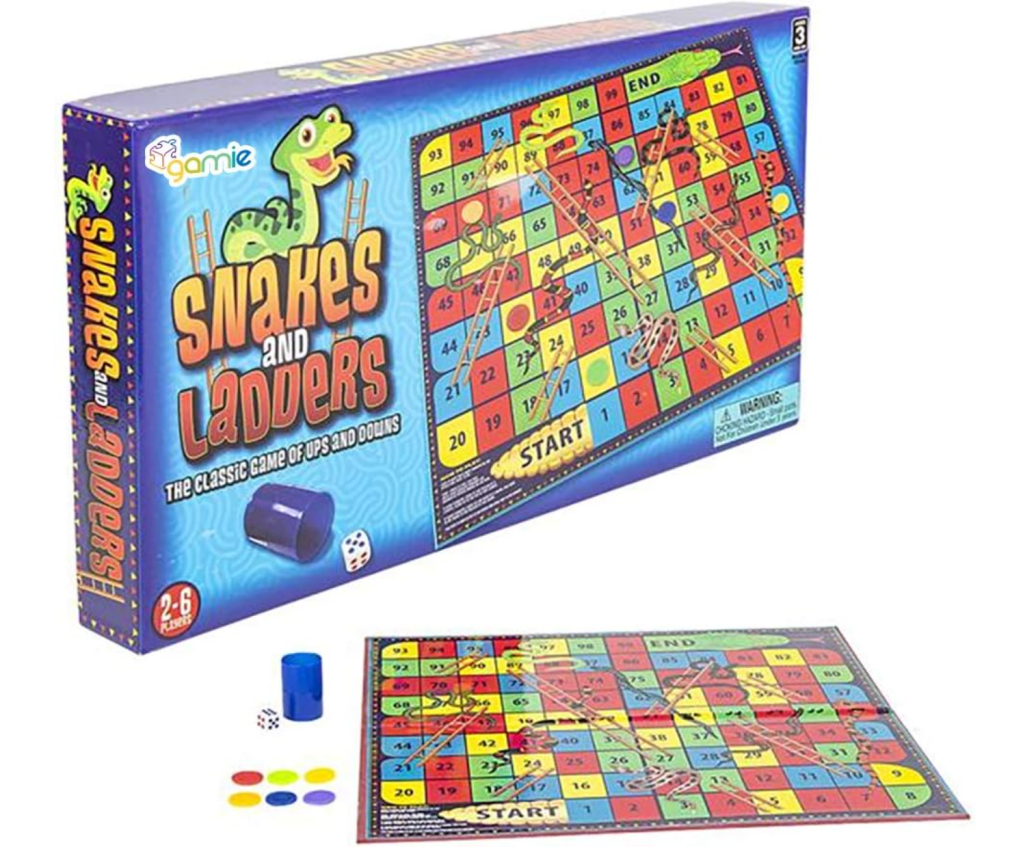
🐍14. Snakes and Ladders
👧 Age group: 3+
📍 Location: Anywhere flat – table, floor, or mat
👥 Players: 2 or more
🎲 Needs: A Snakes & Ladders board, dice, and tokens (coins, buttons, or game pieces)
How to Play:
- Each player picks a token and places it on Start (square 1).
- Players take turns rolling a die and move forward that many spaces.
- If you land on a ladder 🪜: Climb up to the square the ladder leads to!
- If you land on a snake 🐍: Slide down to the tail of the snake.
- First player to reach the last square (usually 100) wins!
Game Skills:
- Taking turns and being patient
- Counting numbers and spaces
- Learns that success might look like failure sometimes, so don’t give up.
Semi-outdoor games
🎵 1. Musical Chairs
- Age: 4+
- Players: 4+
- What You Need: Chairs (one fewer than the number of players), music player
- How to Play:
- Arrange chairs in a circle, back to back.
- Play music while kids walk around the chairs.
- When the music stops, everyone must sit.
- The child without a chair is out. Remove one chair each round until there’s a winner.
- Variation: For safety, have kids step back instead of running when the music stops.
- Skills: Listening, quick reflexes, and fun competition
🥔 2. Hot Potato
- Age: 3+
- Players: 3+
- What You Need: Small ball or beanbag, music player
- How to Play:
- Kids sit or stand in a circle.
- Play music while kids pass the “potato” (ball/beanbag) around.
- Stop the music randomly. The child holding the potato is out.
- Continue until one child remains.
- Variation: Instead of eliminating, give fun tasks to the child who ends up with the potato.
- Skills: Coordination, attention, and patience
🔹 3. In or Out Game
- Age: 4+
- Players: 3+
- What You Need: None, just space to move
- How to Play:
- Choose one child to be the caller.
- The caller says “In” or “Out.”
- In: Everyone moves toward the center or a designated spot.
- Out: Everyone moves back or away from the spot.
- The caller can say instructions quickly or in a tricky pattern. Anyone who moves in the wrong direction is out or does a fun task.
- Continue until one winner remains.
- Variation: Use fun actions instead of walking—like hopping, skipping, or spinning.
- Skills: Listening, focus, coordination, and reaction time
🏠 4. Obstacle Course for Kids
Creating an indoor obstacle course is a great way to keep kids active, burn energy, and have fun—all without leaving home. You can make it as simple or elaborate as you like, using items you already have around the house.
Materials You Might Use
- Pillows or cushions
- Chairs and tables
- Tape (for marking paths)
- Hula hoops or jump ropes
- Small toys or soft balls
- Blankets or towels
🕺 5. Follow the Leader
- Age: 3+
- Players: 2+
- What You Need: Open space
How to Play:
- Choose one player to be the leader.
- The leader performs actions like hopping, clapping, spinning, or walking in different patterns.
- The other players must copy everything the leader does.
- After a set time or distance, switch the leader so another player can lead.
Or
Just play the video on Youtube and ask kids to follow it.
Variation:
- Add fun rules like “freeze when the leader freezes” or use props like scarves or balls.
- Increase difficulty by making the leader’s actions faster or more complex.
Skills: Observation, coordination, concentration, imitation, and physical activity
🌳 6. Hide and Seek (Small Version)
- Age: 4+
- Players: 2–4
- What You Need: Small safe space with hiding spots
How to Play:
- One player counts while the other hides.
- The seeker tries to find the hidden player(s).
- Switch roles after each round.
Variation: Add “safe zones” or time limits for added excitement.
Skills: Observation, strategy, patience, problem-solving
Outdoor Games For Kids
🙈1. Hide and Seek
👧 Age group: 3+
📍 Location: Indoors or outdoors
👥 Players: 2 or more
How to Play:
- One child is the “seeker”, and the rest are hiders.
- The seeker closes their eyes, counts to a set number (like 10 or 20), and says loudly: “Ready or not, here I come!”
- While the seeker is counting, the others quietly run and hide.
- The seeker then goes around to find all the hidden players.
- The first one found becomes the next seeker — or you can take turns.
Safety Tips:
- Set clear boundaries (no hiding near stairs or behind heavy furniture).
- Avoid hiding in spots that require climbing or squeezing into tight places.
- For younger kids, play in small areas and have adults supervise.
🦈2. Shark, Shark – Who’s Getting Caught?
👧 Age group: 3 to 8 years
📍 Location: Open space — backyard, park, large hall
👥 Players: 4 or more
How to Play:
- Choose one child to be the “shark”. The rest are “fish”.
- Draw or mark a “safe zone” at both ends of the play area (like two walls, trees, or cones).
- All the fish stand on one side, and the shark stands in the middle.
- The shark calls out: “Shark, shark — who’s getting caught?”
- All the fish must run to the other safe zone without getting tagged by the shark.
- Anyone tagged becomes a shark too.
- Continue until all fish are turned into sharks!
🔐 3. Lock and Key Game
👧 Age group: 4+
📍 Location: Open space — indoors or outdoors
👥 Players: 6 or more
How to Play:
- Choose one child to be the “Lock” and another to be the “Key.” The rest of the players spread out and run around.
- When the Lock tags a player, that player freezes in place — they are now “locked.”
- Only the Key can “unlock” them — by gently tagging them.
- The Lock keeps tagging and locking players, while the Key tries to unlock as many as possible.
- The game ends when: The Lock freezes everyone (Lock wins!) Or the Key manages to keep everyone free for a certain time (Key wins!)
🔹 4. Under Over Game
- Age: 4+
- Players: 4+
- What You Need: A ball (soft is best)
- How to Play:
- Children form a line or circle.
- The first child holds the ball.
- They pass the ball over their head to the next child, who then passes it under their legs to the next child.
- Keep alternating “over” and “under” passes along the line or circle.
- Speed up gradually to make it more challenging.
- Variation:
- Add multiple balls to increase difficulty.
- Turn it into a race to see which team can pass the ball through fastest without dropping it.
- Skills Developed:
- Coordination and motor skills
- Teamwork and concentration
- Fun physical activity
🔹 5. Kutti Kol Game
- Age: 9+
- Players: 2+
Materials Needed
- Two bricks – placed close together on the ground
- Small sturdy stick (Kutti) – the object to be thrown
- Longer stick (Kol) – used for measuring distance
- Open space – yard, playground, or safe outdoor area
Setup
- Place the two bricks together on a flat surface. This is the starting point.
- Have players stand behind or near the bricks in a line or turn-based order.
How to Play
- The first player throws the kutty (small stick) forward using their hand.
- The other players try to catch the kutty in mid-air.
- If a player catches it, the throwing player is out.
- If no one catches it, the kutty falls to the ground.
- Measure the distance from the brick to the landed kutty using the kol (long stick).
- This distance is the points scored by the player.
- The game continues with the next player taking a turn throwing the kutty.
- Players are eliminated once their kutty is caught.
- The game can continue until all players are out or a pre-decided number of rounds is completed.
Scoring
- Distance from the brick to the kutty determines points.
- Example: 1 kol-length = 1 point (adjust based on your kol’s length).
- Keep a running total for each player.
- The player with the highest score at the end wins.
Skills Developed
- Hand-eye coordination
- Accuracy and aiming
- Physical activity and reflexes
- Friendly competition and strategy
👥 6. Kabaddi
- Age: 9+
- Minimum: 6 (3 per team)
- Ideal: 10–12 (5–6 per team)
Materials Needed
- Open space (yard, playground, or field)
- Chalk or rope to mark boundaries
Setup
- Divide the area into two equal halves.
- Split players into two teams.
- Each team occupies one half of the field.
How to Play
- A player from Team A becomes the raider.
- The raider runs into Team B’s half and tries to tag opponents while continuously chanting “Kabaddi, Kabaddi…” without taking a breath.
- The raider must return to their side without being caught.
- If the raider tags an opponent and gets back safely, the tagged opponent is out.
- If the raider is tackled or stopped before returning, the raider is out.
- Teams take turns sending raiders.
- The game continues until all players from one team are out.
Scoring
- 1 point for each opponent tagged and returned safely.
- 1 point if a raider survives a raid without tagging anyone (bonus rules may vary).
- The team with the most points at the end wins.
Skills: Agility, teamwork, strategy, stamina, breath control, reflexes
🏃 7. Palli / Hopscotch
- Age: 7+
- Players: 4+
- What You Need: Chalk or rope to mark boundaries, open space
How to Play
- Draw a large square or rectangle on the ground, divided into smaller sections (like a grid).
- Players stand in the starting section.
- One player throws a small stone or marker into a numbered section.
- The player hops on one foot through the sections, skipping the one with the stone, and then picks up the stone on the way back without falling.
- If the player steps on a line, loses balance, or lands in the wrong section, the turn ends.
- The next player takes their turn.
- Continue until all sections are completed.
Variation
- Increase difficulty by adding more sections or hopping on one foot for the entire course.
- Time each player for a fun speed challenge.
Skills: Balance, coordination, concentration, agility
🏹 8. Rescue Kabaddi
- Age: 9+
- Players: 6+ (ideally 2 equal teams)
- What You Need: Open yard or playground, small object to “steal” (like a ball, scarf, or cone)
How to Play:
- Divide the yard into two sections, one for each team.
- Each section has a point/object that the other team will try to steal.
- Teams take turns sending one player at a time to pick up the object in the opposing team’s section.
- Players in the defending team try to catch or tag the intruder.
- If the intruder is tagged, they must try to return to their own section with the object.
- Their teammates can help pull them back, but must stay in their own section.
- The round ends when the intruder either successfully returns with the object or is fully stopped by the defending team.
Variation:
- Set a time limit for each attempt.
- Use multiple objects for faster rounds or multiple intruders simultaneously.
Skills: Strategy, teamwork, agility, coordination, quick thinking
🎯 9. Target Toss
- Age: 4+
- Players: 2–4
- What You Need: Soft balls, bucket, box, or small hoop
How to Play:
- Set up a target (bucket, box, or hoop).
- Players take turns tossing balls or beanbags into the target.
- Score points for each successful toss.
- Continue for a set number of rounds.
Variation: Move the target farther away for added challenge, or introduce different point zones.
Skills: Hand-eye coordination, focus, patience
🤹 10. Catch and Toss
- Age: 3+
- Players: 2–4
- What You Need: Soft ball or beanbag
How to Play:
- Players stand a short distance apart.
- Toss the ball/beanbag back and forth.
- Increase difficulty by stepping back or tossing in unusual patterns.
Variation: Use two balls for extra challenge, or count consecutive catches for scoring.
Skills: Coordination, reflexes, focus, teamwork
🏏 11. Gilli Danda (Mini Version)
- Age: 7+
- Players: 2–4
- What You Need: Small stick (gilli), larger stick (danda), small open space
How to Play:
- Place the gilli on the ground and hit it with the danda.
- Try to launch it as far as possible or hit mini targets.
- Players take turns; highest distance or score wins.
Variation: Use soft balls instead of sticks for safety in small spaces.
Skills: Hand-eye coordination, timing, precision


 Lukewarm Mom
Leave a comment