Being healthy is a blessing… but it takes effort.
You can be healthy only if you choose to be healthy.
In this guide, you’ll learn what “eating right” really means and get fun challenges you can do with your child to build healthy habits together. It would help if parents can read this together with their children until after the challenges section.
What does “being healthy” really mean?
- Is it just being strong enough to fight with your sibling? No.
- Is it only about jumping higher than your friend? Not just that.
Being healthy means:
- Your body has enough energy to play, run, and learn.
- Your tummy feels comfortable (not always aching or stuffed with junk food).
- Your body can fight germs so you don’t get sick easily.
- Your bones and muscles grow strong.
- Your mind stays happy, ready to think, focus, and smile.
Eating Right
Eating right means giving your body the fuel and building blocks it needs to grow, play, and stay healthy.
It’s not about eating more—it’s about eating the right balance of foods:
- Energy foods – Rice, Bread, Pasta, Potatoes, Oatmeal, Whole grain cereals, Sweet potatoes 🍚🍞
Give you energy to run, play, and think. - Body-building foods – Lentils, Beans, Eggs, Milk, Cheese, Yogurt, Peanut butter or Nuts 🥛🥚🧀🥜
Help build muscles, skin, and hair. - Protective foods – fruits and vegetables like apples, carrots, spinach, berries 🍎🥕🌿
Keep you from getting sick and help your eyes, skin, and blood stay healthy. - Good fats – nuts, seeds, or a little olive oil 🥜🌻
Keep you warm and help your brain work well. - Water 💧 – keeps every part of your body working smoothly.
Eating right means:
- Eating a mix of these foods every day.
- Eating the right amount (not too much, not too little).
- Eating at the right time (don’t skip meals).
Activities
Eat Right Challenge
Ask your mom or dad for a balanced plate of food every day.
Your plate should have at least one food item from each group:
- Energy foods 🍚🍞🥔
- Body-building foods 🥛🥚🧀🥜
- Protective foods 🍎🥕🌿
- Good fats 🥜🌻
- Water 💧
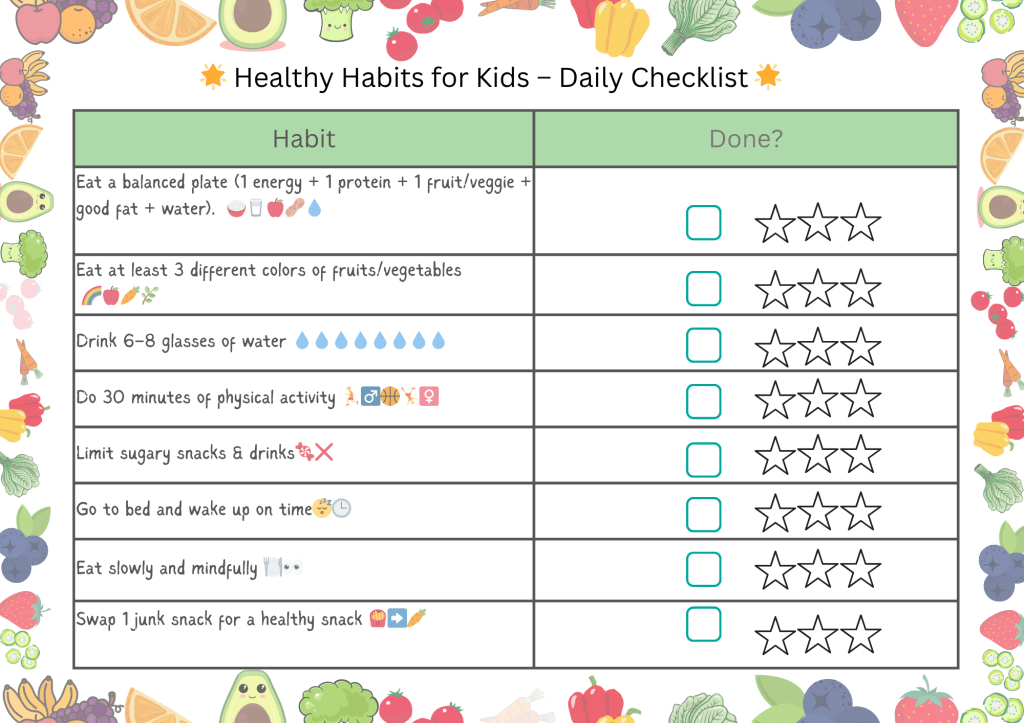
✅ Each day, tick when you’ve eaten from all sections.
At the end of the week, count your ticks—did you balance your food every day?
(You can download below chart and print it to keep track)
You can have other challenges as below:
Water Challenge 💧
- Goal: Drink at least 6–8 glasses of water every day.
- Bonus: Keep a water log with stickers for every glass.
Colorful Plate Challenge 🌈
- Goal: Eat at least 3 different colors of fruits and vegetables every day.
- Kids can draw or tick off colors on a chart.
Move Your Body Challenge 🏃♂️
- Goal: Do at least 30 minutes of physical activity daily.
- Activities: Running, skipping, dancing, cycling, or even active play.
Sugar Check Challenge 🍬❌
- Goal: Limit sugary snacks and drinks.
- Replace soda or candy with fruit, yogurt, or nuts.
- Track how many days they successfully choose healthier options.
Sleep Challenge 😴
- Goal: Go to bed and wake up at the same time every day.
- Keep a sleep chart and see how it affects energy and mood.
Mindful Eating Challenge 🍽️
- Goal: Eat slowly and without distractions (like TV or phone).
- Count 10 bites slowly and notice taste, color, and texture.
Snack Swap Challenge 🥕
- Goal: Swap one junk snack for a healthy snack every day.
- Examples: carrot sticks instead of chips, fruit instead of candy.
Family Cooking Challenge 👩🍳
- Goal: Help prepare one healthy meal with family each week.
- Bonus: Try a new vegetable or grain you’ve never had before.
Building Healthy Eating Habits (Not Food Battles)
Eating right isn’t just about what children eat—it’s also about how they learn to relate to food.
Instead of forcing bites or labeling foods as “good” and “bad,” focus on creating a calm, pressure-free food environment.
Here are a few habits that make a lasting difference:
- Let kids listen to their bodies. Encourage them to notice when they feel hungry and when they feel full. It’s okay if they don’t finish their plate every time.
- Offer, don’t force. Parents decide what food is served; kids decide how much they eat. This builds trust and reduces mealtime stress.
- Eat together when possible. Family meals—even simple ones—model balanced eating and positive food behavior.
- Involve kids in food choices. Let them help wash vegetables, stir batter, or choose fruits at the store. Kids are more likely to eat what they help prepare.
- Be patient with picky phases. Taste preferences change. A food that’s rejected today may be accepted weeks later.
Healthy eating habits grow slowly—through consistency, calmness, and connection, not control.
Hydration Matters More Than We Think
Water often gets overlooked, but hydration plays a big role in children’s energy levels, focus, digestion, and overall health.
Many kids mistake thirst for hunger, leading to unnecessary snacking or irritability.
To support healthy hydration:
- Encourage water as the default drink, especially between meals.
- Offer water regularly, not just when kids ask for it—especially during playtime or hot weather.
- Limit sugary drinks like packaged juices, flavored milk, and soft drinks. Even “healthy” juices should be occasional.
- Make water fun. Colorful bottles, fun straws, or adding slices of fruit can make water more appealing.
- Model it yourself. Kids copy what they see—when you reach for water, they’re more likely to do the same.
Simple hydration habits can quietly improve mood, appetite regulation, and concentration.
Foods to Limit (Without Making Them Forbidden)
No food needs to be completely banned—but some foods are best enjoyed occasionally rather than daily.
The goal isn’t restriction; it’s balance and awareness.
Here are a few things to watch out for:
- Added sugars: Often hidden in cereals, flavored yogurts, sauces, and packaged snacks. Too much sugar can affect energy levels, teeth, and appetite.
- Highly processed foods: Chips, instant noodles, packaged baked goods, and ready-to-eat snacks tend to be high in salt, sugar, and unhealthy fats.
- Sugary drinks: Soft drinks and sweetened juices add calories without nutrition and can replace healthier options like water or milk.
- Excess salt: Too much salt can shape taste preferences early, making kids less open to natural flavors.
Instead of labeling these foods as “bad,” treat them as sometimes foods—enjoyed mindfully, not mindlessly.
When nutritious foods are offered regularly and without pressure, children naturally learn moderation.
Now it’s your turn!
How many of the healthy habit challenges were you able to complete today? ✅
Which ones were easy, and which ones will you try harder at tomorrow?
How long can you keep up your healthy habits this week? Can you make it a fun daily routine?
Remember, every small choice—drinking water, eating a colorful fruit, moving your body—helps your body grow stronger and your mind stay happy! 🌟



Leave a comment