
am, is, are + ing (Present Continuous Tense) Practice for Class 1
When children begin learning English grammar, one of the first sentence patterns they see is:
am / is / are + doing word + ing
This is called the present continuous tense, but for young learners, we simply explain it as:
👉 “Talking about something happening right now.”
This free am, is, are worksheet helps children practice forming correct sentences in a gentle, step-by-step way.
What Is “am, is, are + ing”?
We use:
- I am playing.
- He is running.
- She is reading.
- They are jumping.
- We are eating.
The words am, is, are are helping words.
The -ing form shows that the action is happening now.
This pattern is very important in early grammar learning for:
- Grade 1
- Grade 2
- ESL learners
- Homeschool practice
When Do We Use am, is, are?
Here’s a simple rule children can remember:
| Subject | Helping Word | Example |
|---|---|---|
| I | am | I am writing. |
| He / She / It | is | She is dancing. |
| You / We / They | are | They are playing. |
You can even turn this into a small memory chant while teaching:
I am
He is
They are
Children remember patterns when they hear rhythm.
What Is the -ing Form of Doing Words?
The -ing form is made by adding “ing” to action words:
- run → running
- jump → jumping
- read → reading
- play → playing
This is also called the present continuous verb form.
Why Kids Confuse am, is, and are
Many children:
- Say “She are playing”
- Write “They is running”
- Forget to add “ing”
This happens because they are still learning subject-verb agreement.
Regular practice worksheets help them:
✔ Recognize the correct helping word
✔ Form complete sentences
✔ Build confidence in English grammar
What This “am, is, are” Worksheet Includes
Your printable worksheet can include:
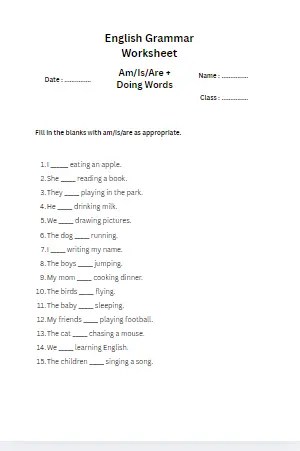
- Fill in the blanks with am / is / are
- Add -ing to the verb
- Choose the correct helping word
- Make sentences from pictures
Short exercises work best for early learners. Keep it simple and clear.
How to Teach “am, is, are” at Home
If you are teaching at home, try this:
- Look around the room.
- Say what people are doing.
Examples:
- Daddy is cooking.
- My sister is studying.
- I am sitting.
- The baby is sleeping.
Real-life examples make grammar natural.
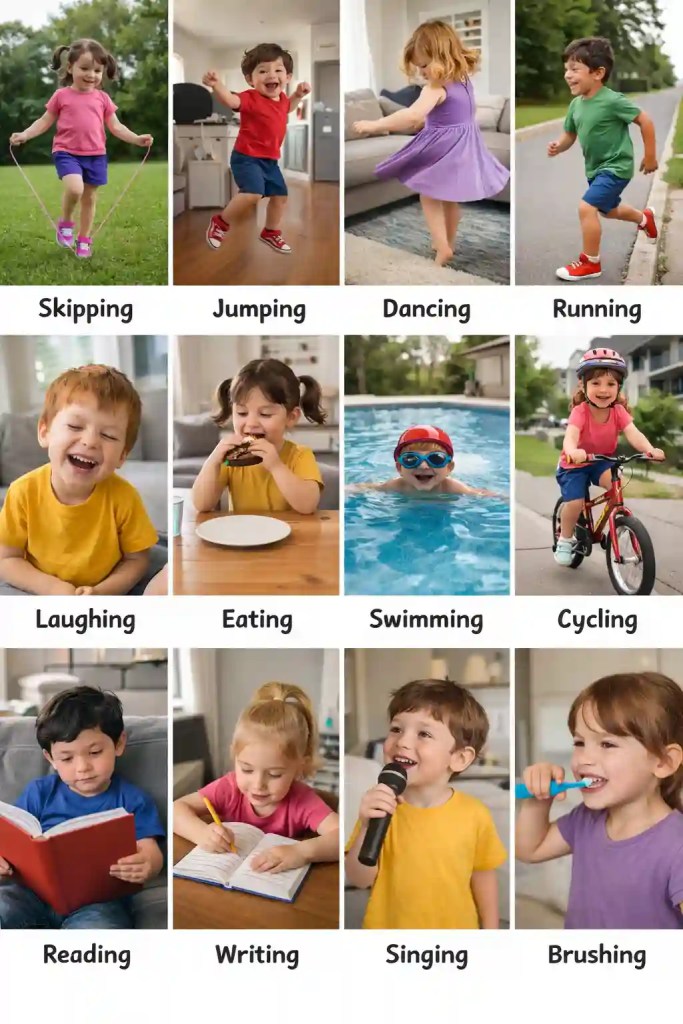
Doing Words with -ing
Who Is This Worksheet For?
This worksheet is ideal for:
- Grade 1 English grammar practice
- Grade 2 revision
- ESL beginners
- Homeschool English lessons
- Parents who want simple grammar support
Download the Free am, is, are + ing Worksheet
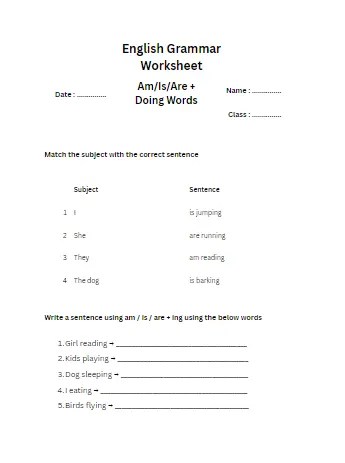
You can download the printable worksheet below and use it for classroom or home practice.
Answer Key: Am/Is/Are Doing Words – Grade 1
Below are the correct answers for the worksheet questions. Use this to check your child’s work or to help explain doing words.
Am/Is/Are Doing Words Worksheet 1
- am eating
- is reading
- are playing
- is drinking
- are drawing
- is running
- am writing
- are jumping
- is cooking
- are flying
- is sleeping
- are playing
- is chasing
- are learning
- are singing
Am/Is/Are Doing Words Worksheet 2
Matching:
I → am reading
She → is jumping
They → are running
The dog → is barking
- The girl is reading.
- The kids are playing.
- The dog is sleeping.
- I am eating.
- The birds are flying.
Frequently Asked Questions
What tense is am, is, are + ing?
It is called the present continuous tense.
When do we use am, is, are?
We use them with subjects:
- I → am
- He/She/It → is
- You/We/They → are
Why do verbs end with -ing?
The -ing form shows that the action is happening right now.
Grammar does not need to feel heavy.
Small, consistent practice helps children slowly understand patterns in language.
If your child mixes up “am, is, are,” that’s completely normal. With gentle repetition and simple worksheets, they will gain clarity over time.




 Lukewarm Mom
Leave a comment