
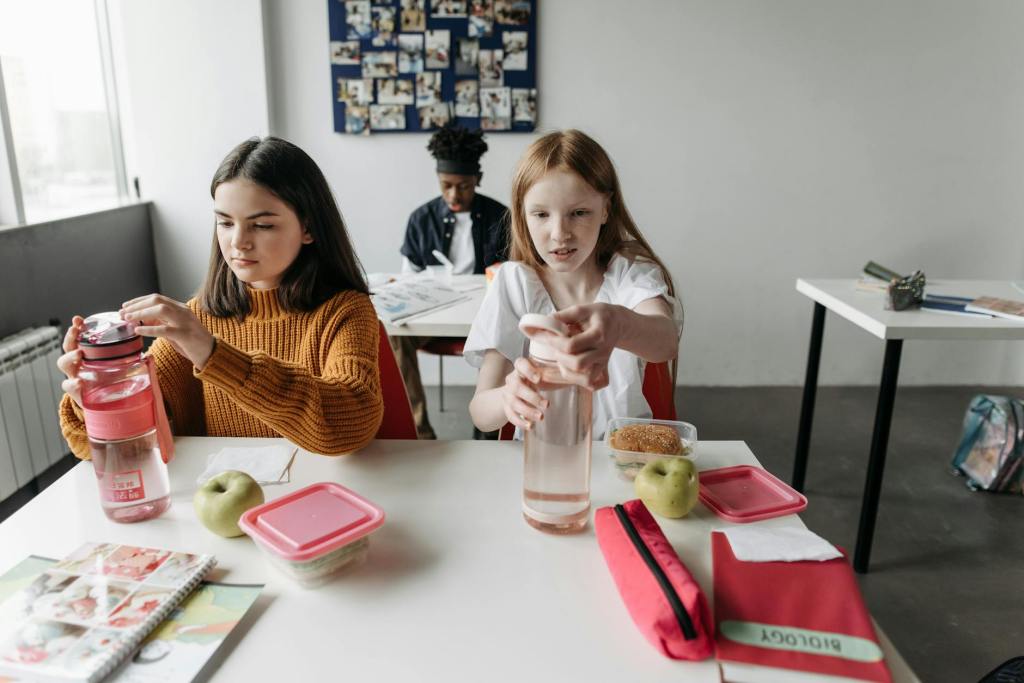
Your child keeps losing things — water bottles, notebooks, lunch boxes, pencils — and when you ask what she did about it, the answer is always the same: nothing. She didn’t search, didn’t ask the teacher, didn’t check the school office. She simply assumed you would handle it.
For many parents, this pattern is deeply frustrating. A child who constantly loses belongings or makes careless mistakes in schoolwork is often labeled careless, irresponsible, or lazy. The natural response is punishment — scolding, taking away privileges, or issuing warnings in the hope that it will “teach a lesson.”
But what if punishment isn’t teaching responsibility at all?
What if a child who appears careless is actually struggling with confidence, initiative, and problem-solving skills — and doesn’t yet know how to take ownership of mistakes?
In this article, we’ll explore why children lose things repeatedly, why they avoid searching or asking for help, and why punishment often backfires. More importantly, we’ll look at practical, gentle ways to teach responsibility, independence, and carefulness — without shame, fear, or constant rescuing.
Because raising a responsible child isn’t about forcing perfection.
It’s about teaching skills that last.
What This Behavior Really Means (And What It Doesn’t)
When a child loses things and refuses to search, ask teachers, or check the office, parents often assume:
- She doesn’t care
- She’s lazy
- She’s irresponsible
- She expects to be rescued
But for most children, especially between ages 5–10, this behavior usually means something else.
Your child may be:
- Overwhelmed and not sure where to begin
- Anxious or embarrassed to ask adults
- Lacking confidence in speaking up
- Avoiding discomfort, not responsibility
- Used to parents stepping in (without anyone realizing it)
This is not a character flaw.
It is a missing skill set.
And skills are taught, not punished into existence.
Why Punishment Backfires
When we punish a child for losing something or making careless mistakes, a few things happen internally:
- Shame replaces learning
The child thinks, “Something is wrong with me,” instead of “What can I do differently?” - Avoidance increases
Next time, she may hide mistakes instead of fixing them. - Dependence deepens
Ironically, punishment often makes kids less independent, not more. They freeze and wait for adults to take over. - Confidence erodes
A child who feels incapable will stop trying.
If the goal is to raise a child who can solve problems independently, punishment takes us in the opposite direction.
Step 1: Pause and Regulate Before Teaching
When you hear “I lost it,” pause before reacting.
Instead of:
- “How many times will you do this?”
- “You never learn.”
Say:
- “Okay. Let’s pause.”
- “Mistakes happen. We’ll think this through.”
A calm parent creates a thinking child.
A scared child cannot problem-solve.
Step 2: Separate the Child From the Problem
This is crucial.
Avoid labels like:
- careless
- irresponsible
- forgetful
Say:
- “You lost something.”
Not: - “You are careless.”
Children live up to the labels we give them — especially the negative ones.
Step 3: Don’t Rescue Immediately (Even Though It’s Tempting)
When your child expects you to fix it, respond with a gentle boundary:
- “I won’t do it for you, but I’ll help you think.”
- “This is something you can try handling.”
This sends two powerful messages:
- I believe you are capable.
- I won’t abandon you.
Rescuing teaches dependence.
Guiding teaches confidence.
Step 4: Teach the Missing Skill — How to Search and Ask
Many kids don’t act because they genuinely don’t know how.
Break it into steps:
- “Where did you last use it?”
- “What places does it usually go if lost?”
- “Who is the right adult to ask?”
You are not interrogating — you are teaching a process.
Step 5: Give Your Child Words to Use
Confidence grows when kids have scripts.
Practice these at home like role-play:
- “Excuse me, I lost my water bottle. Have you seen it?”
- “Ma’am, I think I left my book in class. Can I check?”
- “Something of mine is missing. Where should I look?”
Many children freeze simply because they don’t know what to say.
Words are tools.
Give them tools.
Step 6: Use the Ladder Approach (Support → Independence)
Think of independence as a ladder, not a jump.
Stage 1
- You practice the words
- You stand nearby
- She speaks
Stage 2
- You remind once
- She handles it
Stage 3
- She does it independently
Say:
- “This time, you’ll try. I’ll wait.”
Progress matters more than perfection.
Step 7: Allow Mild Discomfort
This is where growth happens.
If your child refuses to try:
- “That’s okay. Then we’ll leave it for today.”
- “You can try again tomorrow.”
No scolding.
No rescuing.
Natural discomfort teaches responsibility far better than anger ever will.
Step 8: Praise Effort, Not Outcome
Even if the item is not found, say:
- “You asked. That took courage.”
- “You tried. That’s progress.”
- “I’m proud you didn’t give up.”
This builds initiative, which is far more important than never losing things.
Why a Friend Modeling the Behavior Can Help More Than a Parent
Many parents notice something surprising:
When a child loses a water bottle or notebook, she may completely freeze when expected to handle it alone — but if a friend goes with her to the school office or speaks first, the child suddenly manages just fine.
This is not coincidence.
It’s how children learn confidence.
Children often feel safer learning new social or problem-solving skills by watching peers, not parents. When a friend models what to do — walking to the office, asking politely, explaining what was lost — it reduces fear and uncertainty. The task no longer feels overwhelming or embarrassing.
Instead of thinking, “What if I say the wrong thing?”
The child thinks, “Oh, this is how it’s done.”
This kind of peer support:
- Normalizes asking for help
- Reduces anxiety and shame
- Breaks the fear of authority figures
- Builds confidence through shared action
Importantly, the child is still participating. She is not being rescued — she is being guided sideways, not upwards.
Over time, this prepares her for independence. What she first does with a friend, she can later do alone.
As parents, we can support this by saying things like:
- “Maybe you can go with a friend and ask together.”
- “Watch how your friend explains it.”
- “Next time, you can try the same steps.”
This approach teaches responsibility without pressure, and courage without forcing.
It turns problem-solving into a shared learning experience — one that quietly builds lifelong skills.
What About Careless Mistakes in Studies?
The same approach applies.
Instead of:
- “You’re careless.”
Say: - “This looks like a rushing mistake.”
- “Slow down and check once more.”
- “Which step might you have skipped?”
Carefulness is a trainable habit, not a personality trait.
The Long-Term Goal
This is not really about lost water bottles or notebooks.
It’s about raising a child who:
- Tries before giving up
- Asks for help appropriately
- Learns from mistakes without shame
- Trusts her ability to handle problems
One day, she won’t be calling you to fix things.
She’ll say:
“I can try.”
And that’s worth far more than perfect behavior.
Final Thought for Parents
The moment you want to punish is often the moment your child needs guidance the most.
Teach the skill.
Hold the boundary.
Protect the confidence.
That’s how responsibility actually grows.





Leave a comment