

Some days, it’s not just your child who is overwhelmed.
The noise, the questions, the constant touch, the mental load—it builds up.
And while we talk a lot about sensory overload in children, parents experience it too.
Sometimes at the same time.
This guide is for both of you.s can experience sensory overload.
This post contains affiliate links. As an Amazon Associate, I earn from qualifying purchases at no additional cost to you.
What Is Sensory Overload?
Sensory overload happens when the brain receives more input than it can process—noise, light, touch, movement, or emotional stress.
For children, it may look like a meltdown.
For parents, it may feel like irritation, exhaustion, or the sudden need to escape.
Different reactions. Same overwhelm.
Causes of Sensory Overload in Children
Children are still learning how to regulate their emotions and responses, which makes them more sensitive to overwhelming environments. Some common causes include:
- Loud noises (parties, malls, fireworks)
- Bright or flashing lights
- Uncomfortable clothing or textures
- Crowded spaces where too much is happening
- Too many instructions at once
- Transitions (ending playtime, starting homework, etc.)
Signs of Sensory Overload in Kids
Children don’t say “I’m overstimulated.”
They show it.
- Covering ears or avoiding sounds
- Sudden crying or meltdowns
- Refusing clothes or foods
- Becoming clingy or unusually quiet
- Aggression or “out of character” behavior
What looks like misbehavior is often overload.
I see this often with my own daughter.
She loves rice. She loves fish. But if the two are served together, she won’t eat. Even if a vegetable is on someone else’s plate at the same table, she feels too uncomfortable to touch her food.
And although she genuinely enjoys dancing, she refused to join a class after the loud music during the trial session overwhelmed her.
These moments can easily be mistaken for picky eating or avoidance. But often, they’re something else entirely—a child trying to cope with sensory overload in the only way they know how.
Real-life situations like these are why it’s so important to look beyond behavior and recognize the signs of overwhelm.
How Parents Experience Sensory Overload
It’s not just kids—parents can feel it too. Between constant background noise, household chores, and kids calling “Mom!” a hundred times, the brain can hit its limit.
This part is rarely talked about—but deeply real.
- Feeling touched out
- Snapping over small things
- Headaches or mental fatigue
- Needing silence immediately
- Wanting to withdraw
- Difficulty focusing with background noise
It’s not a lack of patience. It’s nervous system overload.

In my own case, I don’t remember feeling particularly sensitive as a child. But now, as a mom, I notice sensory overload showing up more often—especially in noisy or chaotic moments at home.
Interestingly, some of my daughter’s complaints about her own overwhelm sound very familiar to me. It makes me wonder if these sensitivities are partly genetic, or if they simply become more obvious when daily life is full of demands and constant stimulation.
Even small things feel different now—like wearing jeans that once felt completely comfortable but now feel restrictive by the end of the day. It’s subtle, but it adds up.
Gentle Coping Strategies for Kids
Parents can help children feel calmer with small adjustments:
- Create a calm space at home with low light and soft textures
- Offer noise-cancelling headphones in loud places
- Prepare them in advance for busy outings
- Keep routines predictable during stressful times
- Provide sensory-friendly tools like fidget toys, chewy snacks, or weighted blankets

In my daughter’s case, her classroom often feels too loud, and she once told me it made her angry. Since earphones aren’t allowed, I gave her two little cotton pads to soften the noise and a small squishy toy to keep her hands busy. It was a simple adjustment, but it gave her just enough comfort to handle the school environment more peacefully.
Co-Regulation: Calming Together Before They Calm Alone
Children learn to self-regulate only after being co-regulated. When their nervous system is overwhelmed, they borrow ours to find calm.
In moments of sensory overload, the goal isn’t to teach logic (“it’s not that loud!”) — it’s to offer safety through presence.
How it looks in real life:
- Lower your own voice and slow your breathing — your calm tone cues their nervous system to slow down too.
- Move closer physically if they allow — gentle touch (a hand on the shoulder, a hug, holding their hand) can help ground them.
- Say fewer words, more comfort: “You’re safe. Let’s take a minute together.”
- Mirror breathing — breathe slowly and invite them to match your rhythm.
- When possible, guide them to a quieter space and stay with them until their body softens.
Why it matters:
Children don’t just need quiet surroundings; they need a calm nervous system nearby to model and mirror regulation. Over time, co-regulation becomes internalized self-regulation — a skill they carry for life.
Coping Strategies for Parents
Your well-being matters too. Try:
- Reducing background noise (turn off TV/radio when not in use)
- Taking short breaks—even 5 minutes in another room can help
- Practicing grounding techniques (deep breaths, focusing on one sense at a time)
- Asking for help when needed instead of pushing through overwhelm
- Protecting some quiet time in your daily routine
When You Know It’s Going to Be Overwhelming
Some days just come with extra noise, crowds, and chaos. Maybe it’s a family gathering, a festival, or a packed weekend. When you can’t avoid stimulation, planning ahead can make a huge difference for both you and your child.
What helps:
- Plan downtime: Schedule small breaks before and after the event. A quiet 10–15 minutes can reset the nervous system.
- Know your triggers: If bright lights, loud music, or strong smells are tough, identify calm spots you can step into when needed.
- Bring sensory tools: Noise-canceling earbuds, sunglasses, or familiar comfort items help create a sense of control.
- Stay nourished: Eat and hydrate regularly – hunger and fatigue worsen overload.
- Decompress later: After busy days, lower lights, limit screens, and keep things calm.
Even when life feels loud, a little preparation can help everyone feel more balanced and in control.
Sensory Support Ideas for Calmer Days
Creating a sensory-friendly environment doesn’t have to be complicated. A few thoughtful tools and playful activities can help children (and parents!) feel more grounded when the world feels “too much.”
1. Sensory Play with Sensory toys and tools
Sensory play gives children a safe way to explore touch, sound, movement, and light — helping their nervous systems practice regulation.
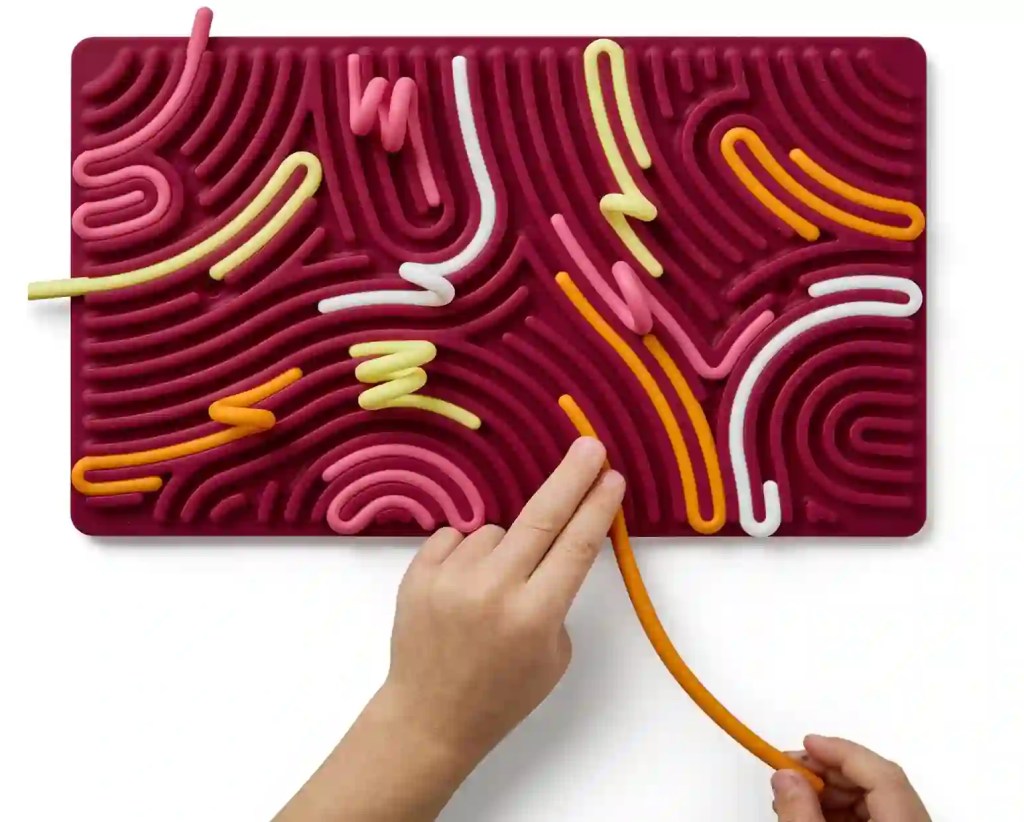
- Tactile play: Soft playdough, kinetic sand, rice bins, or water beads
- Movement play: Mini trampoline, balance board, or yoga ball
- Visual & auditory play: Light-up toys, soft glowing lamps, and gentle musical instruments

2. Sensory Wall/Room or Calm Corner
Dedicate a small corner or wall for sensory exploration — think textures like velvet, velcro, smooth tiles, or wall-mounted sensory panels. It can become your child’s go-to spot to self-soothe and reset.

Even a cozy tent or a small space with dim lighting, white noise, and a weighted blanket can work wonders. A calm corner offers emotional safety — a place to rest, breathe, and reconnect.
Sensory overload isn’t misbehavior in kids—or weakness in parents. It’s the body’s way of saying, “I’ve had too much.” By noticing the signs early and using gentle coping strategies, you can bring more calm and connection into your family life.
Frequently Asked Questions
Can parents experience sensory overload?
Yes. Constant noise, touch, and mental load can overwhelm the nervous system.
What causes sensory overload in children?
Noise, lights, textures, crowds, and emotional stress.
How do I calm my child during sensory overload?
Reduce stimulation, stay calm, and focus on comfort—not correction.
Why do I get irritated so quickly as a parent?
It may be sensory overload, not a lack of patience.
Sensory overload doesn’t just affect a child’s nerves — it can influence their behavior, emotional responses, and how they interact with the world around them. Understanding these emotional and behavioral patterns is an important part of supporting kids through everyday challenges. For more insights into emotional growth, behavior, and helping children navigate their feelings, explore our Emotional Growth & Behavior pillar.




Leave a Reply