
Simple tools to help your child learn—without the overwhelm
Table of Contents
The early elementary years can feel like a lot.
Suddenly, your child is expected to read, write, sit still, remember things, and somehow like it too. And you’re expected to support all of that—between everything else on your plate.
This space is designed to make that easier.
Not perfect. Not structured down to the minute. Just… easier.
These are simple, low-pressure tools you can use at your kitchen table, on a random weekday, in between real life. If something here helps your child understand one small thing today—or makes school feel a little less frustrating—that’s a win.
Building Strong Foundations (Without Pressure)
This is where to start if your child is still figuring out the basics—reading, writing, and how language works.
No long lessons. No overwhelm. Just small, manageable steps that build confidence over time.
Grammar Worksheets for Early Elementary
Grammar is often treated like a set of rigid rules to be memorized, but for a 6 or 7-year-old, it’s actually about discovery. At this stage, grammar is simply the “glue” that helps their stories make sense. These resources are designed to help children recognize and understand how language works through observation and play, rather than overthinking it.
These worksheets focus on helping children recognize and understand how language works, without overthinking it.
Parts of Speech Worksheets: Explore our full collection of naming words, doing words, and more.
Sentence Structure Worksheets: Learn how to build clear sentences, from subjects and predicates to proper punctuation.
Deep Dive Resources
1. Nouns & Naming (The “Who” and “What”)
- Noun Worksheets for Grade 1
- Common and Proper Noun Worksheets for Grade 1
- Plural Nouns Worksheets for Grade 2
- Naming Words Worksheets for Kids
- Engaging Noun Worksheets Bundle for Grades 1–3
2. Verbs & Action (The “Doing”)
- Verb Worksheets for Kids
- Have and Has Worksheets for Kids
- Doing Words Worksheets for Kids
- Am Is Are Worksheets for Grade 1
3. Pronouns (Replacing Names)
- He, She, It Worksheets for Kids
- I and You Pronouns for Grade 1
- He, She, Him, Her, His Worksheets
- Hands-On Pronoun Cut and Paste Worksheets | Grade 1 & 2 Grammar Bundle

4. Descriptions & Positions
- Describing Words Worksheets for Kids
- Preposition Worksheets for Kids
- Position Words Worksheets for Kids
5. Fix The Sentences
- Fix the Sentence Worksheet: Capitals and Punctuation Practice for Grade 1
- More Fix the Sentence Worksheets for Grade 1
- Fix the Sentence Worksheets for Grade 2 (Free Printable PDF)
If you are following a specific curriculum or just looking for a quick 5-minute practice session, you can find our full, organized collection here:
Reading & Understanding
Once kids start reading, the next step is making sense of what they read.
This section will include:

- Grade 1 Reading Comprehension Worksheets Bundle
- Free reading comprehension printables
- Picture-based observation activities
- Gentle thinking prompts
- Storytelling
(Coming Soon) Writing & Expression
For kids who hesitate to write—or don’t know what to say.
- Low-pressure writing prompts
- Short, guided exercises
- “Start where you are” activities
Classroom Helpers & Morning Routines
Setting up a positive, engaging learning environment is just as important as the lesson plan itself! From first-week-of-school introductions and icebreakers to everyday classroom management tools, these resources are designed to make early elementary learning fun, communal, and stress-free.
First Week of School
The first week of school is an important time for helping students settle into their new classroom environment. It is focused on building routines, introducing classroom expectations, and helping children feel comfortable and confident in their new space. During this week, teachers spend more time on community-building activities rather than academics, allowing students to adjust gradually and feel a sense of belonging. Simple, engaging tasks like learning classroom rules, sharing about themselves, and participating in icebreakers help create a positive classroom culture from day one.
- Meet the Teacher Templates: A Simple Way to Welcome Students and Families
- Classroom Rules Chart for Elementary Classrooms
- “What would you do?” scenario cards! Free Icebreakers for Early Elementary
- All About Me Worksheet for Elementary Students
- Back-to-School Scavenger Hunt (Free Printable)
- 50 Fun Brain Break Games for the Classroom
- Tongue Twisters for Kids by Age: Easy, Funny & Challenging Tongue Twisters
- ELA Classroom Warm-Up Ideas: Quick & Engaging Activities for English Class
Creating Easy Learning Routines
Learning at home isn’t just about what kids learn—it’s about how it fits into your day.
These tools are designed to reduce the constant reminding, negotiating, and “did you finish this?” loop.
Not to make you more productive. Just to make things run a little smoother.
Helpful Back-to-School Learning Supplies
If you use printable worksheets regularly, a laminator can help turn them into reusable learning activities. See our guide to the best laminators for back-to-school worksheets for parents, homeschoolers, and teachers.
Planners & Simple Organizers
- Weekly learning planners for kids
- Visual schedules to map out their day
- Simple layouts that don’t overwhelm
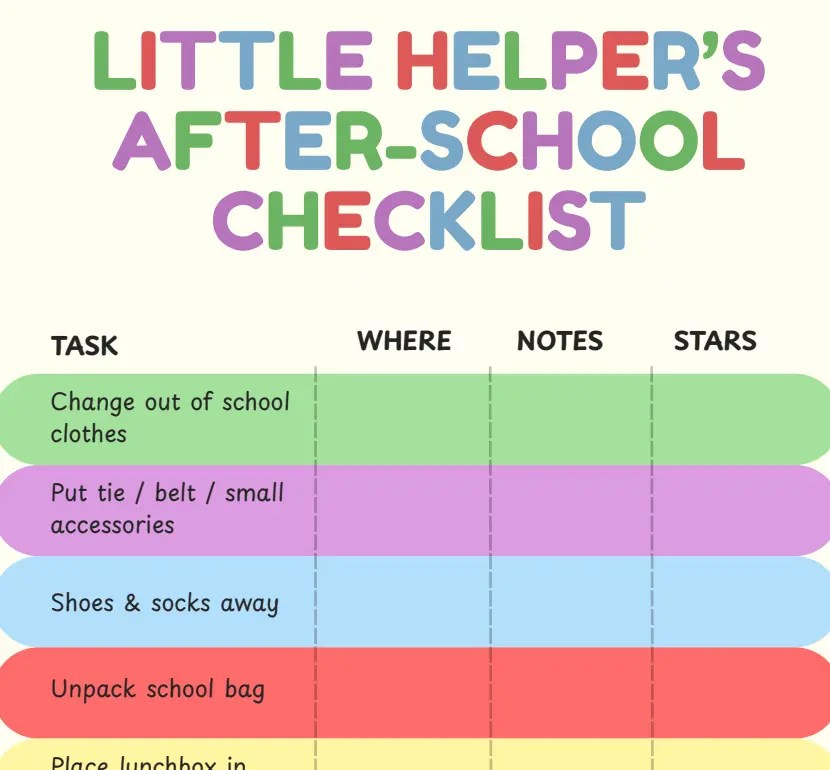
Trackers That Build Consistency
- Reading trackers
- Printable Assignment Trackers
- Small progress logs that help kids see what they’ve done
These aren’t about pressure or performance.
They’re about giving kids a sense of progress—and giving you one less thing to carry mentally.
Browse all planners & trackers
For the “Lukewarm” Days
Some days, everything works.
Other days:
- no one wants to sit down
- the worksheet feels too hard
- your coffee is cold (again)
This space is built for those days too.
You don’t need a perfect routine or a color-coded system.
You just need something small that works today.
A 10-minute worksheet.
One completed page.
One concept that finally clicks.
That counts.
Looking for More Support?
If you’re trying to make daily life feel a little lighter—not just learning time—you might also like:
- Parenting during Early Childhood – simple ways to connect with your child without adding more to your day
- Motherhood & Well-being – gentle systems and resets for you
Final Note
You don’t have to do everything.
You don’t have to catch up.
You don’t have to turn your home into a classroom.
You’re just helping your child learn, in the middle of a real, full life.
And that’s more than enough.