
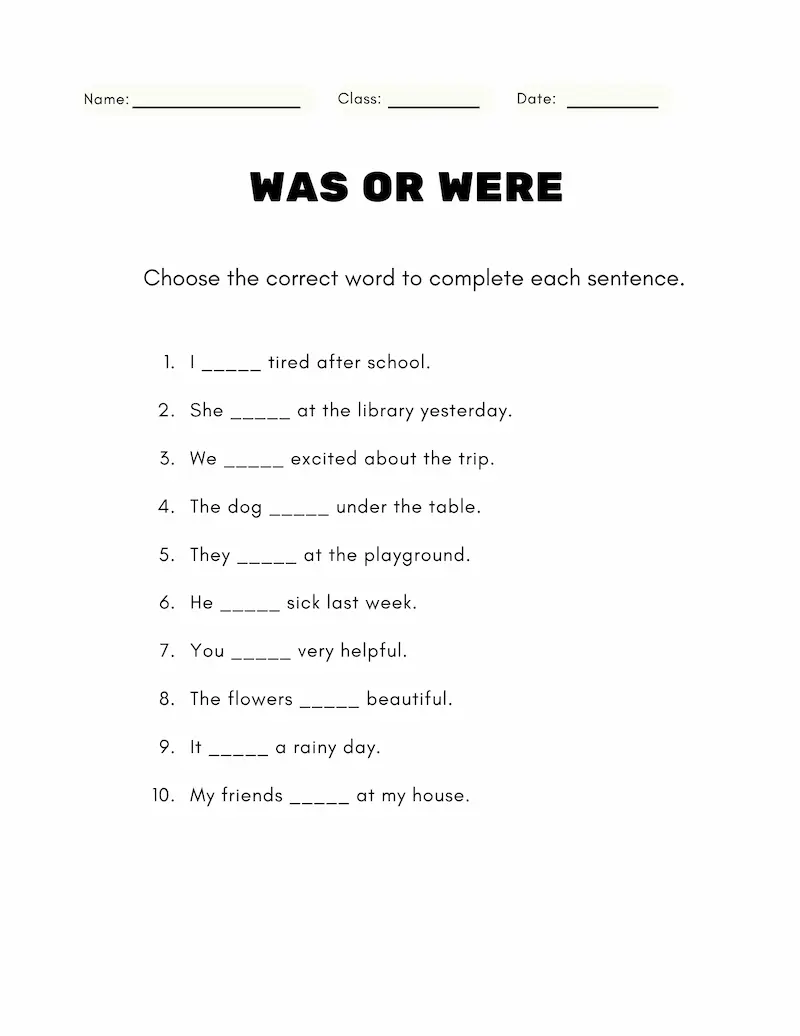
Learning when to use was and were is an important part of learning past-tense sentences. Children often know that both words refer to the past, but choosing the correct one can still be confusing.
These was and were worksheets for Grade 2 and Grade 3 give children plenty of simple practice with choosing, completing, and writing sentences using was and were. The activities are designed to help students understand the difference through repeated practice rather than memorizing a complicated grammar rule.
Was vs. Were: What Is the Difference?
Was and were are past-tense forms of the verb to be.
We generally use was with:
- I
- he
- she
- it
- singular nouns
We generally use were with:
- you
- we
- they
- plural nouns
Examples
- I was tired.
- She was at school.
- The dog was hungry.
- You were late.
- We were happy.
- They were playing outside.
- The children were excited.
A simple way to remember it is:
One person or thing → was
Two or more people or things → were
There is one important exception children should remember:
You were is correct, even when we are talking to just one person.
Was and Were Examples
Here are some simple examples children can read before starting the worksheets.
| Subject | Correct Form | Example |
|---|---|---|
| I | was | I was hungry. |
| He | was | He was at home. |
| She | was | She was happy. |
| It | was | It was cold. |
| The cat | was | The cat was sleepy. |
| You | were | You were right. |
| We | were | We were ready. |
| They | were | They were outside. |
| The boys | were | The boys were playing. |
Was and Were Worksheets
The worksheets below include different types of practice so children can work on the skill gradually.
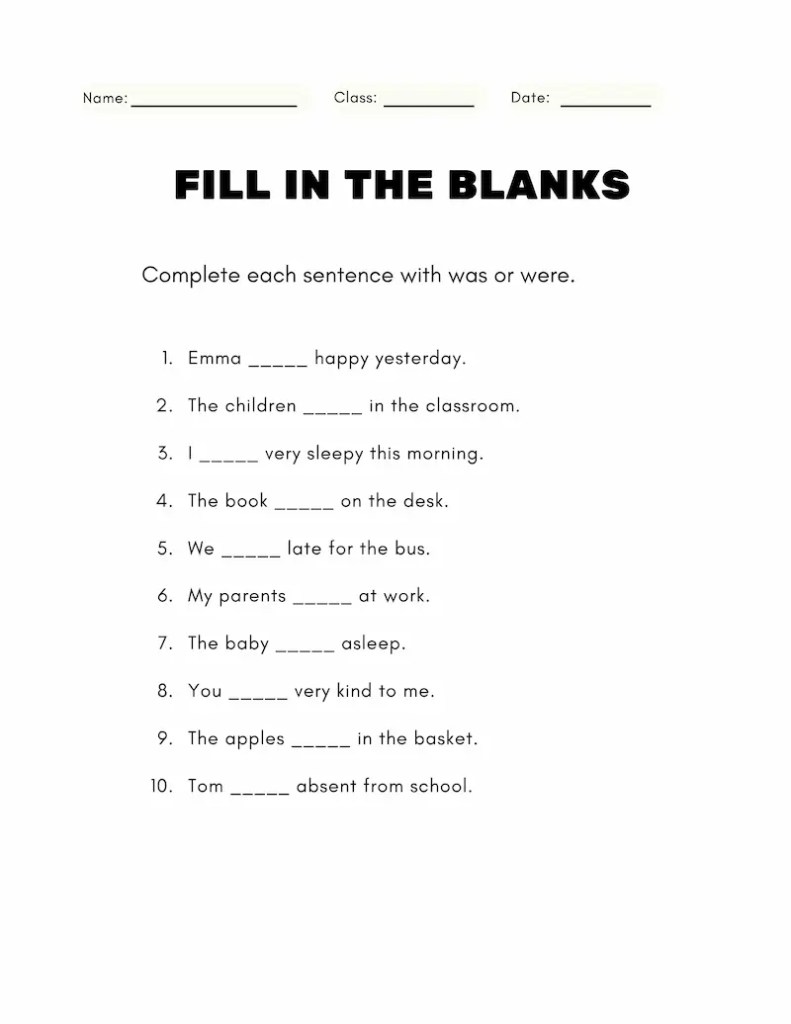
Answer Key – Worksheet 1
- was
- was
- were
- was
- were
- was
- were
- were
- was
- were
Answer Key – Worksheet 2
- was
- were
- was
- was
- were
- were
- was
- were
- were
- was
Was and Were Worksheets PDF
If you’re looking for was and were worksheets for Grade 2 or Grade 3, these activities can be used for classroom practice, homework, tutoring, or extra grammar practice at home.
The worksheets can include:
- Was or were multiple-choice questions
- Fill-in-the-blank exercises
- Singular and plural practice
- Sentence correction
- Question formation
- Short reading practice
- Sentence writing
- Answer keys
Tips for Teaching Was and Were
If your child keeps mixing up was and were, don’t worry. This is a common part of learning past-tense grammar.
1. Start with the subject
Ask the child:
Who or what are we talking about?
Then decide whether the subject is singular or plural.
For example:
The boy → was
The boys → were
2. Practice with pairs
Using pairs can make the difference easier to see:
- The dog was hungry.
- The dogs were hungry.
- The girl was happy.
- The girls were happy.
- The book was interesting.
- The books were interesting.
3. Don’t forget “you were”
This is one of the trickier parts for beginners.
We say:
You were happy.
Not:
You was happy.
This is true even when we are talking to only one person.
4. Use familiar situations
Children often understand grammar better when the sentences are connected to everyday experiences.
Try sentences such as:
- I was at school.
- We were at the park.
- My mom was busy.
- My friends were outside.
- The food was delicious.
- The children were tired.
Was and Were Practice for Grade 2 and Grade 3
By practicing was and were in different kinds of sentences, children can gradually become more confident with past-tense forms of to be.
Start with simple was/were choices, then move on to sentence correction, questions, reading passages, and independent writing.
Once children understand the basic pattern, encourage them to look for who or what the sentence is about before choosing the verb.
Frequently Asked Questions
What is the difference between was and were?
Was and were are past-tense forms of the verb to be. We generally use was with I, he, she, it, and singular nouns, while were is used with you, we, they, and plural nouns.
When do you use was?
Use was with I, he, she, it, and singular nouns. For example: “She was happy” and “The dog was hungry.”
When do you use were?
Use were with you, we, they, and plural nouns. For example: “We were tired” and “The children were outside.”
Do we say “you was” or “you were”?
We say you were, even when speaking to only one person. For example: “You were very helpful.”
What grade do children learn was and were?
Children commonly begin learning and practicing was and were in the early elementary grades. Grade 2 and Grade 3 are good stages for reinforcing the difference through sentence and worksheet practice.
Are was and were past-tense verbs?
Yes. Was and were are the past-tense forms of be (or to be).
How can children practice was and were?
Children can practice by completing sentences, choosing between was and were, correcting sentences, answering questions, and writing their own sentences.
Related Grammar Worksheets
- am, is, are + ing Worksheets for Grade 1 with Answers
- Nouns for Grade 1 — Fun Noun Worksheets + Free Printable PDF
- Verb Worksheets for Grade 1 – Free Printable Verb Worksheets with Answers
- Fix the Sentence Worksheets for Grade 1
- Fun Picture Comprehension Worksheets for Kids (Grades 1–3)
- I and You Pronouns for Grade 1 (Fun Worksheets & Activities)
- I and Me Worksheets for Elementary Students
- Am, Is, and Are Helping Verbs for Grade 1
If you found this worksheet helpful, feel free to save it, print it, or share it with other parents and teachers
Happy learning!
If you’re looking for more learning worksheets for early elementary children, you can explore our growing collection of skill-based practice resources designed for ages 5–8. From language and reading skills to simple grammar concepts like parts of speech, these worksheets are created to support gentle, stress-free learning at home.







Leave a Reply