
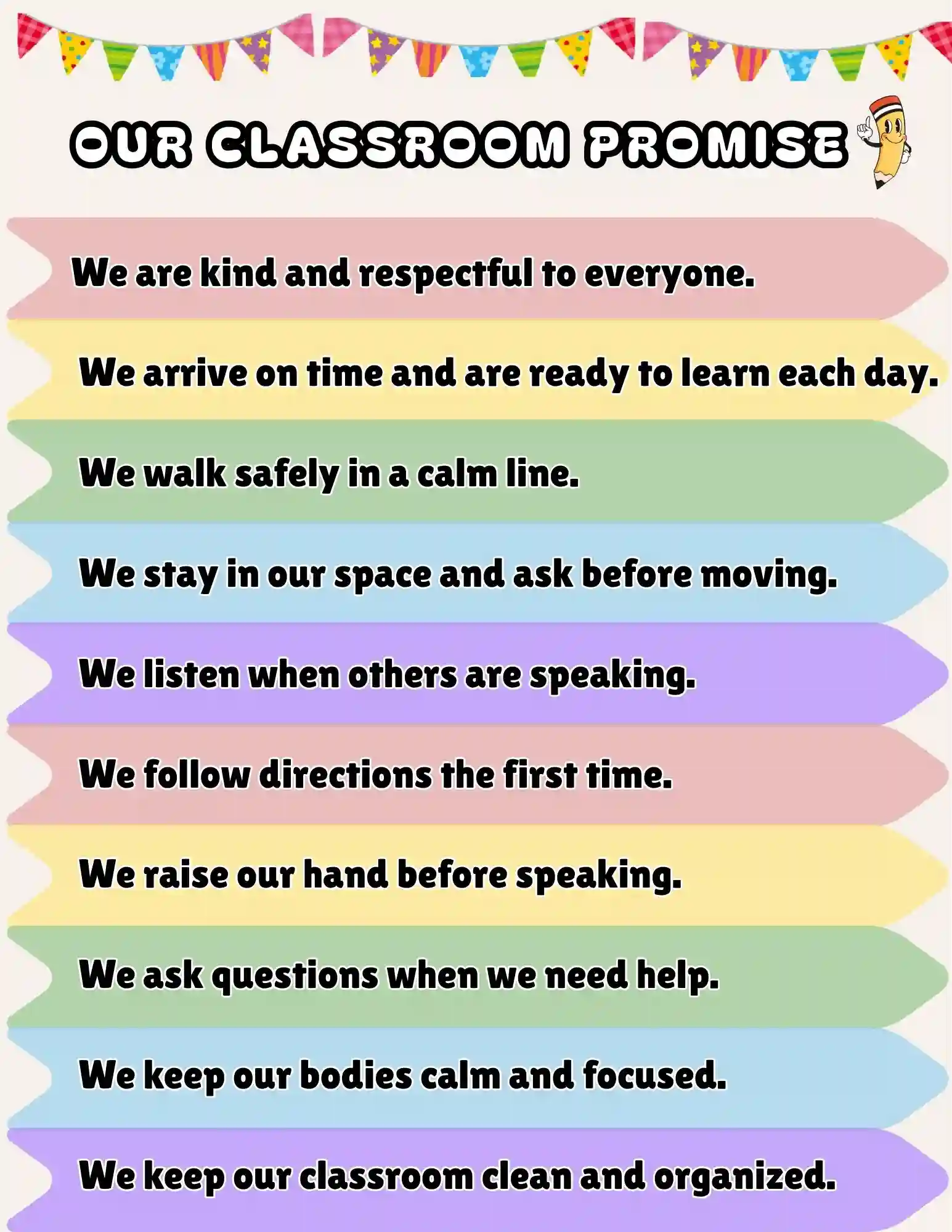
Creating a positive classroom environment begins with clear, simple expectations that students can understand and follow from the very first day. A Classroom Rules Chart is a helpful visual tool that sets the tone for behavior, learning, and respect throughout the school year.
For early elementary students, especially kindergarten and primary grades, visual rules work better than long explanations. They help children remember expectations and build consistent routines in a gentle and encouraging way.
Why Classroom Rules Charts Matter
A Classroom Rules Chart helps establish structure while keeping the classroom warm and supportive. When students know what is expected of them, they feel more confident and secure in their learning environment.
Some key benefits include:
- Encouraging positive behavior
- Building classroom routines
- Supporting independence
- Creating a sense of safety and structure
- Helping teachers manage the classroom smoothly
- Promoting kindness and respect among students
Instead of focusing only on restrictions, good classroom rules highlight positive actions students can take.
Common Classroom Expectations
Most effective classroom rules are short, clear, and action-based. For example:
- We are kind and respectful to everyone.
- We listen when others are speaking.
- We follow directions the first time.
- We keep our hands, feet, and objects to ourselves.
- We stay in our space and ask before moving.
- We raise our hand before speaking.
- We walk safely in the classroom.
- We take care of our classroom and materials.
- We try our best and keep learning.
- We help make our classroom a happy place.
These simple statements are easy for young learners to understand and remember.
How to Use a Classroom Rules Chart
A Classroom Rules Chart can be used in many ways:
Classroom Display
Place the chart in a visible area so students can refer to it throughout the day.
Morning Review
Read and review the rules together each morning, especially during the first weeks of school.
Behavior Reminders
Point to specific rules when guiding behavior in a calm and positive way.
Classroom Discussion
Talk with students about why each rule is important and how it helps everyone learn better.
Tips for Teaching Classroom Rules
To make classroom rules more effective, keep these tips in mind:
- Use positive language instead of “don’t” statements.
- Keep rules short and easy to remember.
- Limit the number of rules (10 or fewer is ideal).
- Use visuals or icons to support understanding.
- Model each rule through actions and routines.
- Reinforce rules consistently with praise and reminders.
Young children respond best when expectations are simple, consistent, and visually supported.
Classroom Rules Chart Designs
Many teachers prefer charts that feel welcoming and calm rather than strict or overwhelming. Soft colors, floral accents, and clean layouts can make classroom expectations feel more inviting.
A well-designed chart should:
- Be easy to read from a distance
- Avoid cluttered visuals
- Highlight positive behavior
- Match the classroom theme without distraction
Free Download: Classroom Rules Chart
You can download this Classroom Rules Chart as a ready-to-print PDF to use in your classroom. It is designed with simple, positive language that is easy for young students to understand and follow.
This printable is perfect for:
- Classroom wall displays
- First week of school routines
- Morning behavior review
- Building classroom expectations
- Early elementary classrooms
The chart uses clear, student-friendly statements focused on kindness, respect, responsibility, and learning together.
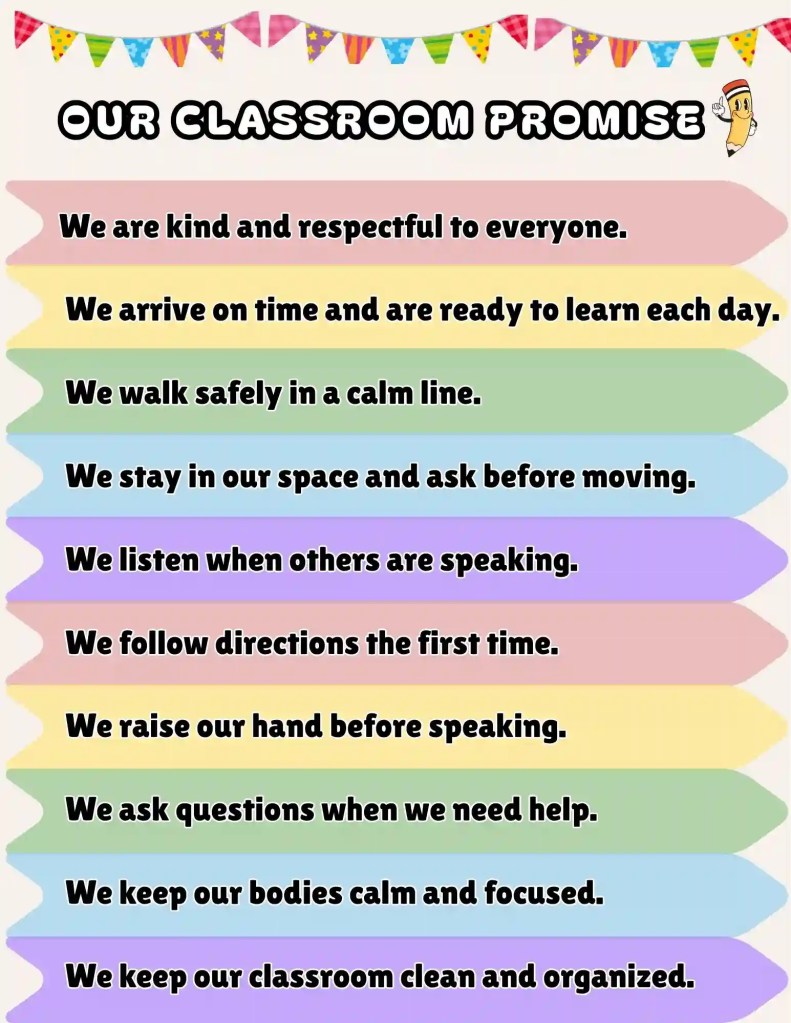
Download your free Classroom Rules Chart below and start building a positive classroom environment from day one.
Final Thoughts
A Classroom Rules Chart is more than just a poster—it is a foundation for classroom culture. When expectations are clear and positive, students are more likely to feel safe, respected, and ready to learn.
Starting the school year with simple, consistent rules helps create a classroom environment where both teachers and students can thrive.
More Back-to-School Resources
If you’re looking for more back-to-school printables, classroom activities, and ideas to help you plan for the new school year, you may find this helpful collection of back to school guides and inspiration useful. It includes practical resources for teachers and parents to make the transition back to school easier, more organized, and more engaging for students.
- All About Me Worksheet for Elementary Students
- Scenario-Based Conversation Starters for Kids
- Meet the Teacher Templates: A Simple Way to Welcome Students and Families
- Back-to-School Scavenger Hunt (Free Printable)
- 50 Fun Brain Break Games for the Classroom (No-Prep Activities Kids Will Love)
- Tongue Twisters for Kids by Age: Easy, Funny & Challenging Tongue Twisters
If you liked this, you can explore more of our low-pressure learning for early elementary activities to make elementary learning enjoyable for kids and teachers.



Leave a Reply