
Looking for simple and engaging adverb worksheets for kids? These printable grammar activities help children learn how adverbs describe actions in a sentence in a fun and easy way.
Adverbs are words that describe verbs, adjectives, or other adverbs. They often tell us how, when, where, or how often something happens. In early elementary grammar, students are usually introduced to adverbs as words that add more detail to actions.
For example:
- She sang beautifully.
- The dog barked loudly.
- We will go tomorrow.
Many adverbs end in -ly, but not all adverbs follow that pattern. Words like often, soon, here, and very are also adverbs.
Adverbs make sentences more detailed and meaningful. Compare these two sentences:
- The boy spoke.
- The boy spoke politely.
The adverb politely gives more information about how the action happened. Learning adverbs helps children improve both reading comprehension and writing skills.
Explore our complete Parts of Speech Worksheets for more fun grammar practice activities including nouns, verbs, adjectives, pronouns, adverbs, articles, prepositions, and more for elementary learners.
Common Examples of Adverbs
Here are a few common adverbs children often encounter:
- quickly
- slowly
- loudly
- softly
- happily
- sadly
- carefully
- yesterday
- outside
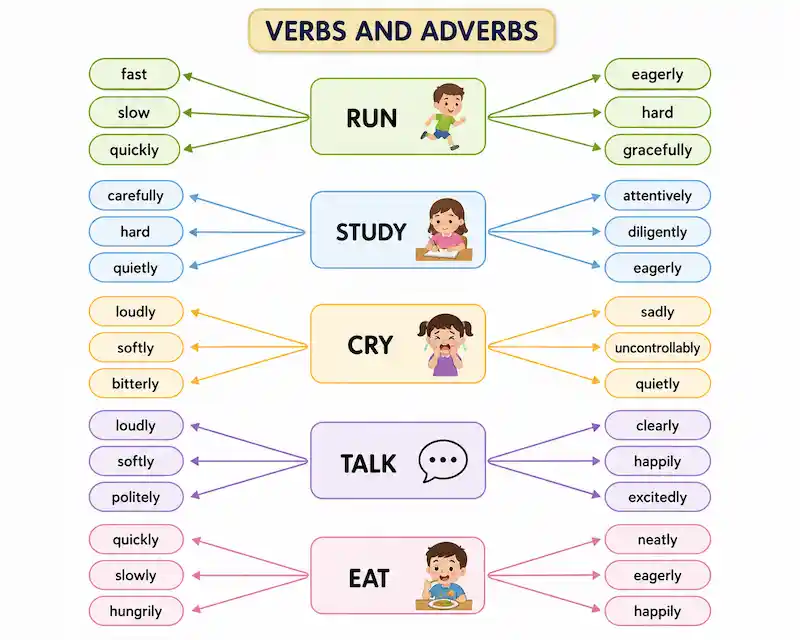
What’s Included in These Free Adverb Worksheets?
This printable set includes:
- Circle the adverb worksheets
- Choose the correct adverb from brackets activities
- Simple sentence-based grammar practice
- Beginner-friendly exercises for early learners
These worksheets are designed to help children recognize adverbs within sentences and understand how they make writing more descriptive.
Who Are These Worksheets For?
These adverb worksheets work well for:
- 1st grade grammar
- 2nd grade grammar
- 3rd grade review
- homeschool language arts
- classroom centers
- independent practice
- grammar revision activities
Why Practice Adverbs?
Learning adverbs helps children:
- build stronger sentence structure
- improve reading comprehension
- write more descriptive sentences
- understand parts of speech more clearly
Short and consistent grammar practice can make it easier for young learners to remember how adverbs function in everyday writing.
Download Free Adverb Worksheets
Use these printable adverb worksheets at home or in the classroom for extra grammar practice. The activities are simple, clear, and designed for young learners who are beginning to explore parts of speech.

Answer Key:
- peacefully
- quickly
- loudly
- slowly
- happily
- correctly
- sweetly
- carefully
- eagerly
- kindly
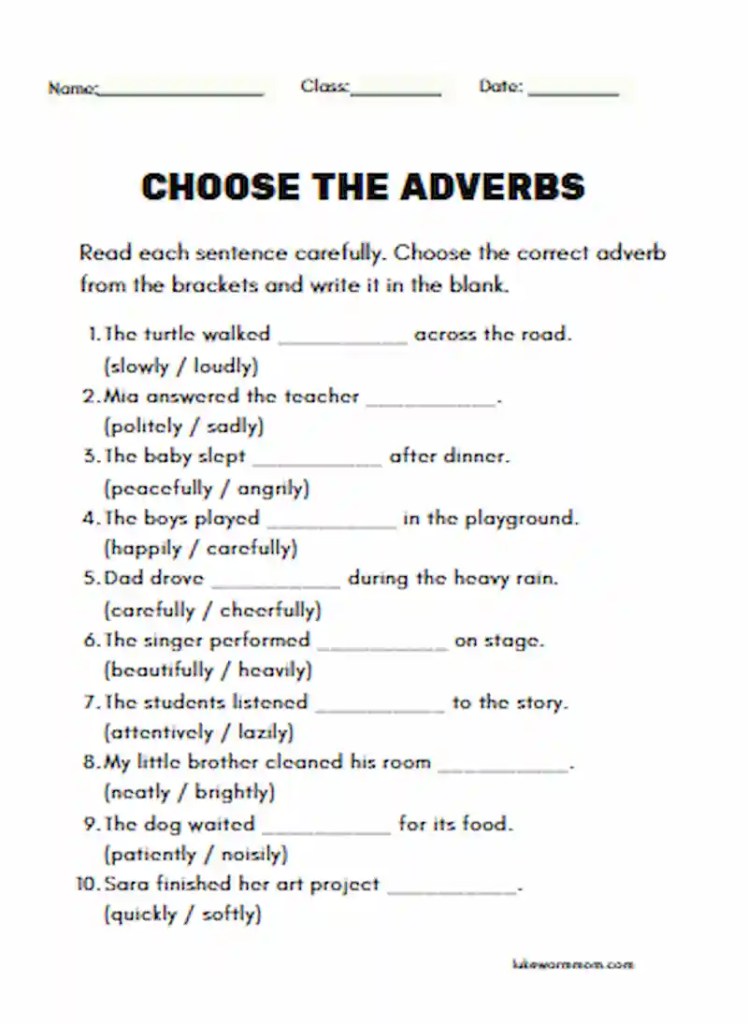
Answer Key
- slowly
- politely
- peacefully
- happily
- carefully
- beautifully
- attentively
- neatly
- patiently
- quickly
Tips for Teaching Adverbs to Kids
Adverbs can feel confusing at first because they can describe different parts of a sentence. A simple way to introduce them is by focusing on action words first.
Try asking questions like:
- How did she run?
- When did they arrive?
- Where did the dog go?
This helps children connect adverbs to real actions and situations. Reading simple sentences aloud and identifying the describing word together can also make grammar practice more interactive.
Activities such as circling adverbs, matching verbs with adverbs, and completing sentences are especially helpful for early learners.
Frequently Asked Questions About Adverbs
What is an adverb?
An adverb is a word that describes a verb, adjective, or another adverb. It often tells how, when, where, or how often something happens.
Do all adverbs end in -ly?
No. Many adverbs end in -ly, but words like very, soon, often, and here are also adverbs.
What grade do children learn adverbs?
Many children begin learning basic adverbs in 1st or 2nd grade as part of parts of speech lessons.
What are examples of adverbs?
Some common examples include:
- quickly
- quietly
- happily
- always
- tomorrow
- outside
More Grade 1-3 Worksheets You May Like
- Position Words Worksheet for Grade 1
- Describing Words Worksheets for Class 1 (Free Printable PDFs)
- Naming Words Worksheets for Grade 1 (Free Printable PDFs)
- Doing Words for Grade 1: Easy Guide + Free Printable Worksheets
- am, is, are + ing Worksheets for Grade 1 with Answers (Free Printable PDFs)
- Free Picture Comprehension Worksheets for Kids (Grade 1–3) + Printable PDF
- A, An, The Worksheets for Class 1 (Free Printable PDF)
- This, That, These, Those Worksheets (Free Printable PDF)
- Parts of Speech Worksheets for Kids (Free Printable PDFs)
- Sentence Structure Worksheets for Kids (Grade 1–5)
- Fix the Sentence Worksheets for Grade 2 (Free Printable PDF)
Subscribe for more tips, activities, and guidance to support your child’s learning and growth.
If you’re looking for more learning worksheets for early elementary children, you can explore our growing collection of skill-based practice resources designed for ages 5–8. From language and reading skills to simple grammar concepts, these worksheets are created to support gentle, stress-free learning at home.


Leave a Reply