
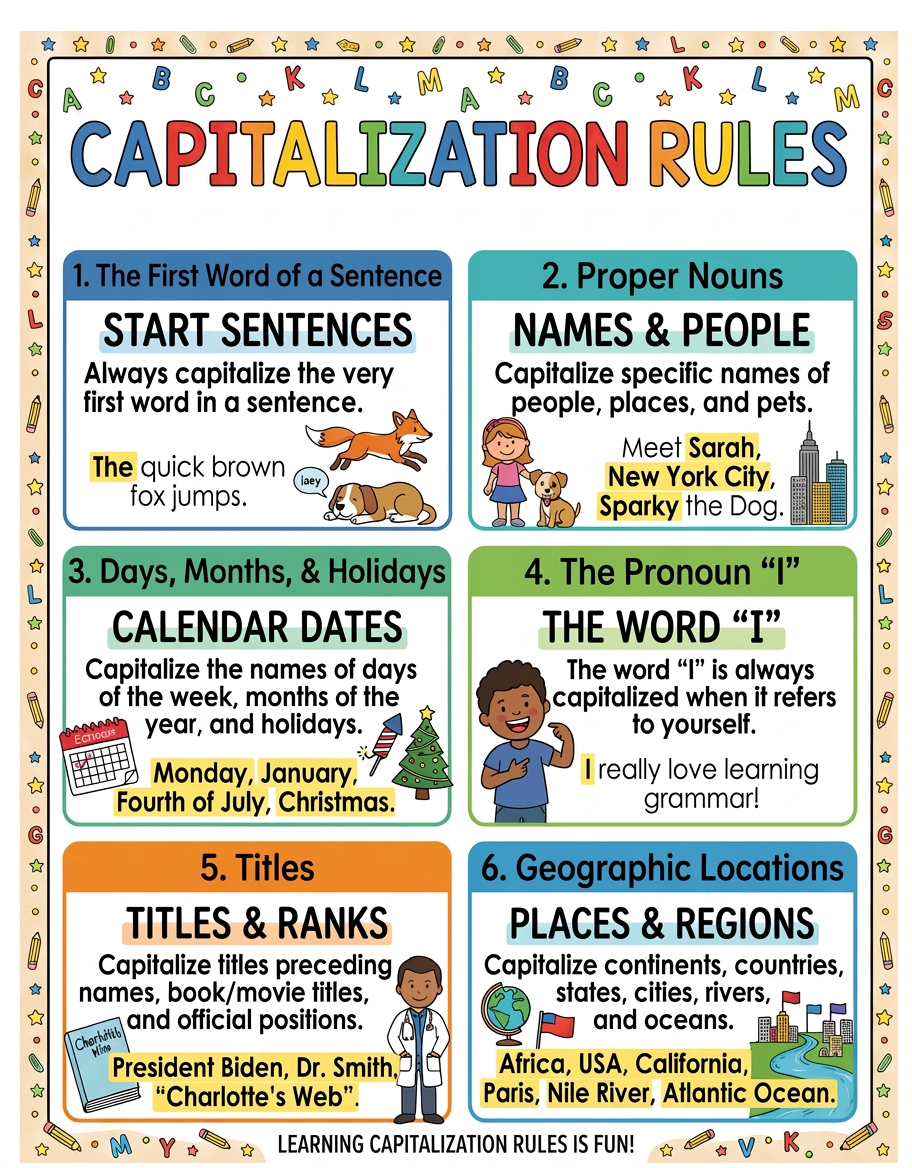
These sentence structure worksheets help kids learn how to build complete sentences, identify sentence parts, correct errors, and practice word order. Find printable sentence structure activities for Grade 1, Grade 2, Grade 3, and beyond—including subject and predicate, scrambled sentences, sentence types, sentence combining, and sentence expansion.
Table of Contents
Sentence structure is one of the most important building blocks of English grammar. It helps children understand how words come together to form clear, meaningful sentences.
But many kids struggle with:
- putting words in the correct order
- identifying who is doing the action
- writing complete sentences instead of fragments
This page brings together simple, structured sentence practice worksheets that help children move step by step—from basic sentence formation to confident writing.
Here you’ll find printable activities for:
✔ Sentence formation
✔ Sentence correction
✔ Word order practice
✔ Sentence building skills
What is Sentence Structure?
Sentence structure is the way words are arranged to form a correct sentence.
A simple sentence usually follows this pattern:
Subject + Verb + Object
Example:
- ✔ I eat apples
- ✘ Eat apples I
Good sentence structure helps children:
- express ideas clearly
- improve writing skills
- avoid grammar mistakes
Before learning sentence structure, children are gently introduced to parts of speech like nouns, verbs, and adjectives in a simple and kid-friendly way. These help them start understanding how sentences are formed.
Subject (Who is doing the action?)
The subject is the person or thing doing something in the sentence.
Examples:
- She is reading a book.
- The dog is barking loudly.
- I am eating breakfast.
Subject = She / The dog / I
Verb (What is happening?)
The verb is the action word in the sentence.
Examples:
- She is reading a book.
- The dog is barking loudly.
- I am eating breakfast.
Verb = is reading/is braking/am eating
Object (Who is the action happening to)
The object is the part of the sentence that receives the action.
It answers the question: “What?” or “Whom?”
Examples:
- She is reading a book.
- The dog is barking loudly.
- I am eating breakfast.
Object = a book /(no object)/breakfast
Predicate (what the subject does)
The predicate is the part of the sentence that tells us something about the subject.
It includes the verb + everything that tells what the subject is doing or what is happening.
Examples
1. She is reading a book.
- Subject = She
- Predicate = is reading a book
2. The dog is barking loudly.
- Subject = The dog
- Predicate = is barking loudly
3. I am eating breakfast.
- Subject = I
- Predicate = am eating breakfast
- Subject = WHO the sentence is about
- Predicate = WHAT is said about the subject
Subject-Verb Agreement
Once children understand what a subject and verb are, the next step is learning how they work together correctly in a sentence.
This skill is called subject-verb agreement.
Subject-verb agreement means that the verb must match the subject.
For example:
- He does his homework.
- They do their homework.
- She is happy.
- They are happy.
Children often make mistakes such as:
- ❌ He do his homework.
- ❌ They is playing.
- ❌ She have a book.
Regular practice helps children recognize whether the subject is singular or plural and choose the correct verb form.
Common subject-verb agreement topics for early elementary learners include:
- Do and Does
- Has and Have
- Am, Is, Are
- Was and Were
- Play and Plays
- Run and Runs
Types of Sentence Structure Worksheets
This hub is organized into different skill levels so children can learn step-by-step.
1. Basic Sentence Formation Worksheets (Grade 1–2)
These worksheets help children understand how sentences are formed.
Skills covered:
- Word order (correct arrangement of words)
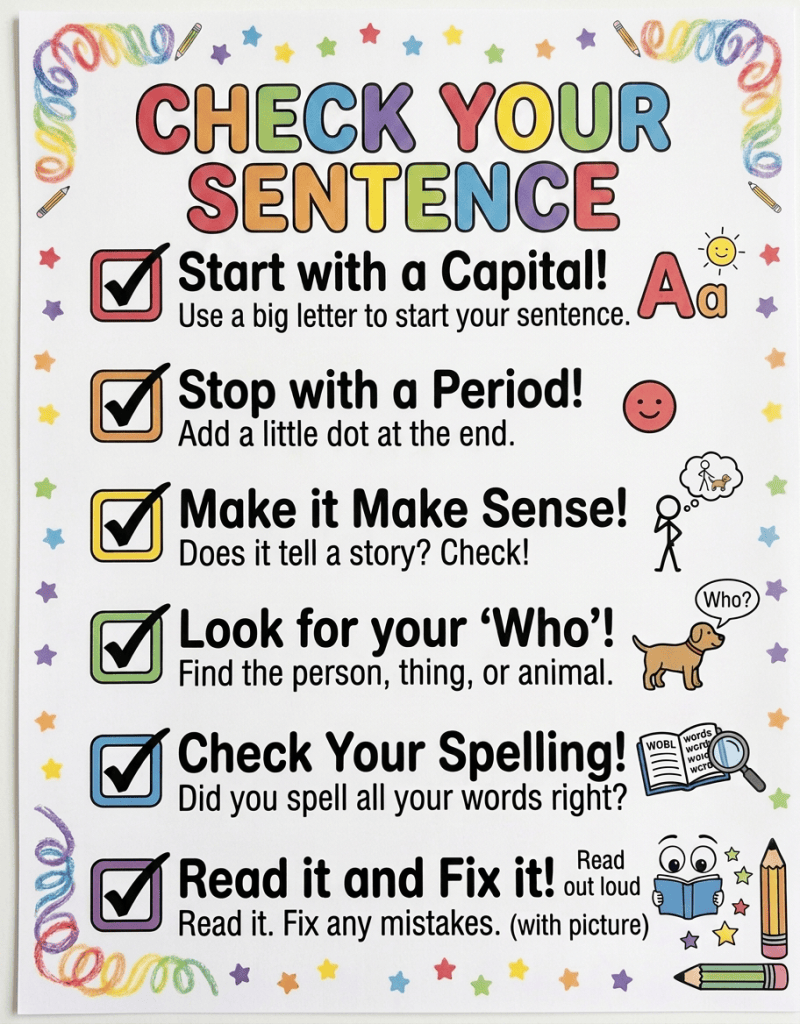
- Capital letter at the beginning
- Full stop at the end
Example activity:
Rearrange words to form a sentence:
school / I / go / to
✔ Answer: I go to school.
Capital Letters, Full Stops & Commas (Grade 1–2 Worksheet)
2. Subject and Predicate Worksheets (Grade 2–4)
This helps children understand the two main parts of a sentence.
- Subject → who or what the sentence is about
- Predicate → what the subject does
Example:
- The dog is barking
- Subject: The dog
- Predicate: is barking
These worksheets improve sentence awareness and grammar foundation.
Subject and Predicate Worksheets for Grade 2 & 3: Easy Grammar Guide
3. Unscramble Sentences Worksheets
These are one of the most effective grammar practice tools for kids.
Skills covered:
- Word order logic
- Sentence formation thinking
- Grammar structure recognition
Example:
playing / children / are / the park / in
✔ Answer: Children are playing in the park.
Scrambled Sentences Worksheets for Grade 1 Readers
4. Subject-Verb Agreement Worksheets
These worksheets help children build stronger grammar skills and write more accurate sentences.
Related Subject-Verb Agreement Worksheets
5.Types of Sentences Worksheets
Children learn how sentences serve different purposes.
Four types:
- Declarative (statement)
- Interrogative (question)
- Imperative (command)
- Exclamatory (emotion)
Example:
Turn into a question:
You are happy.
✔ Are you happy?

Sentence Types Worksheets for Grade 1–2 (Declarative, Interrogative, Imperative, Exclamatory)
6. Fix the Incorrect Sentences Worksheets

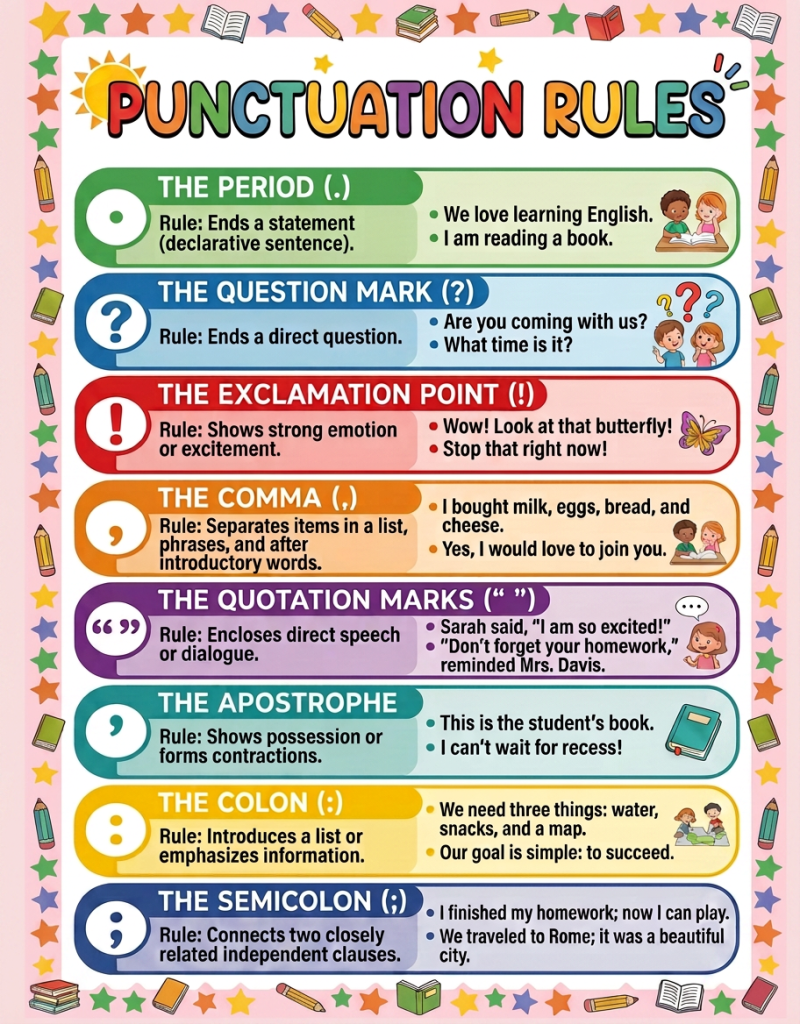
These worksheets build editing skills.
Skills covered:
- Grammar correction
- Capitalization errors
- Word order mistakes
Example:
she going school
✔ She is going to school.
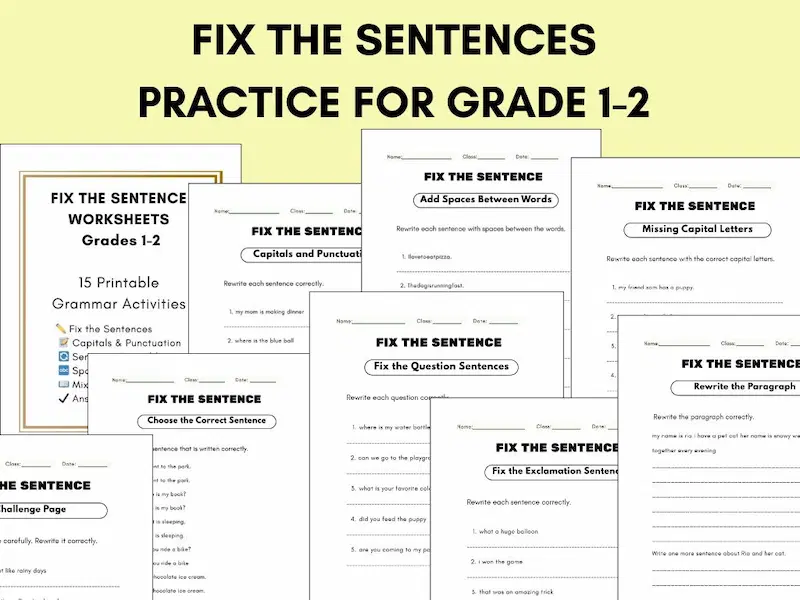
Fix the Sentence Worksheet: Capitals and Punctuation Practice for Grade 1
Fix the Sentence Worksheets for Grade 1
Fix the Sentence Worksheets for Grade 2 (Free Printable PDF)
7. Sentence Combining Worksheets
Helps children move from simple to complex writing.
Skills covered:
- Joining sentences using:
- and
- but
- because
Example:
- I like apples.
- I like oranges.
✔ I like apples and oranges.
Sentence Combining Worksheets Using and, but, and because
8. Build Your Own Sentence Worksheets
This is where creativity begins.
Activities include:
- Picture-based sentence writing
- Topic-based writing (school, animals, home, friends)
- Guided sentence prompts
Example:
Write a sentence about your favorite animal.
✔ The tiger is a strong animal.
Question Words & WH Questions Worksheets
Question words help children learn how to form proper interrogative sentences.
Kids practice using:
- who
- what
- when
- where
- why
- how
- which
- whose
These activities improve:
- sentence structure
- question formation
- grammar confidence
- reading comprehension
Common activities include:
- fill in the blanks
- matching question words
- framing questions
- choosing the correct WH word
You may also like:
Free WH Questions Worksheets for K–1

9. Sentence Expansion Worksheets
Helps children add detail and improve writing quality.
Example:
- The cat sleeps
→ The small cat sleeps on the sofa.
Skills covered:
- adjectives
- where/when details
- descriptive writing
Why Sentence Structure Practice is Important
Regular sentence structure practice helps children:
- write clearly and confidently
- reduce grammar mistakes
- improve reading comprehension
- build strong writing foundations
Recommended Learning Path
If your child is just starting:
- Basic sentence formation
- Subject and predicate
- Unscramble sentences
- Fix sentence errors
- Sentence combining
- Sentence expansion
- Creative sentence writing
Related Worksheets
You may also like:
Sentence structure is not learned in one day—it develops through consistent practice.
Even 10 minutes a day using simple worksheets can significantly improve a child’s confidence in English writing.