

Verb worksheets for grade 1 are an important step in helping children build simple sentences. At this stage, kids learn that a verb is a word that tells us what someone or something is doing.
For example:
- run
- jump
- eat
- read
- play
These words show actions, so they are called verbs.
In early elementary classes, verbs are sometimes also called doing words because they describe an action. If your child is just starting grammar, you can also try our doing words worksheets for Grade 1.
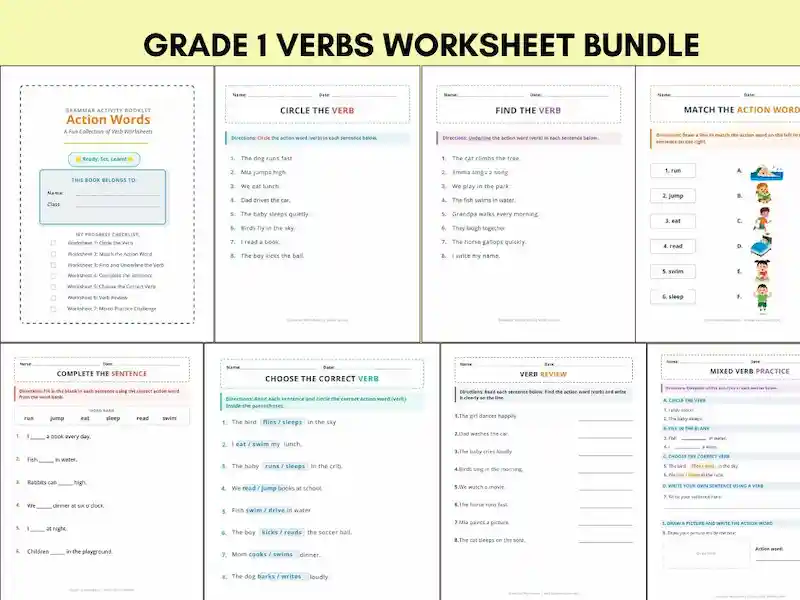
These Grade 1 verb worksheets are simple, classroom-friendly printables designed for young learners. They help children identify verbs, match actions to pictures, and use verbs in sentences.
Explore our complete Parts of Speech Worksheets for more fun grammar practice activities including nouns, verbs, adjectives, pronouns, adverbs, articles, prepositions, and more for elementary learners.
What Are Verbs? (Grade 1 Explanation)
A verb is a word that shows an action.
Examples:
- The boy runs.
- The girl reads a book.
- The dog jumps.
- The baby sleeps.
The highlighted words show what the person or animal is doing, so they are verbs.
Teachers often introduce verbs as action words so children can easily understand the concept.
Verb Examples for Grade 1
Here are some common action verbs children learn in early elementary school.
- run
- jump
- play
- eat
- drink
- read
- write
- sing
- dance
- sleep
Children will see many of these verbs in the worksheets below.
Activities in These Verb Worksheets
These printable worksheets include simple activities that help children practice identifying verbs.
1. Circle the Verb
Children read a short sentence and circle the action word.
Example:
The boy runs fast.
The cat sleeps on the mat.
2. Match the Picture to the Verb
Children look at pictures and match them with the correct verb.
Example verbs:
- run
- jump
- eat
- read
This activity helps children connect actions with words.
3. Fill in the Blank with the Correct Verb
Children choose the correct verb to complete the sentence.
Example:
I ______ my lunch.
(play / eat)
Answer: eat
4. Write a Sentence with a Verb
Children practice writing a simple sentence using an action word.
Example:
- I run in the park.
- She reads a book.
This helps children begin forming their own sentences.
Free Printable Verb Worksheets (Grade 1)
These worksheets are designed for:
- Grade 1 students
- early elementary learners
- ESL beginners
- homeschool practice
- classroom grammar activities
Teachers and parents can print the worksheets and use them for extra grammar practice at home or in class.
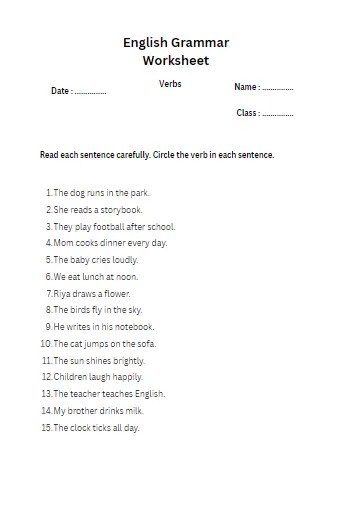
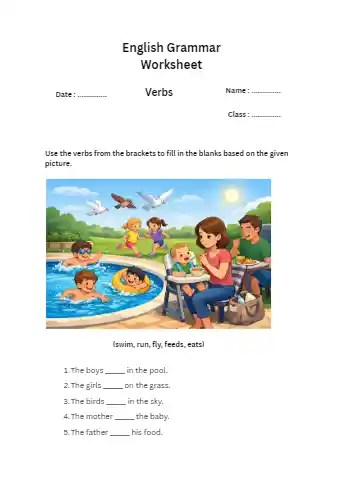
Want more verbs practice? Purchase grade 1 verb worksheet bundle here. Great for grade 1 and grade 2 review:
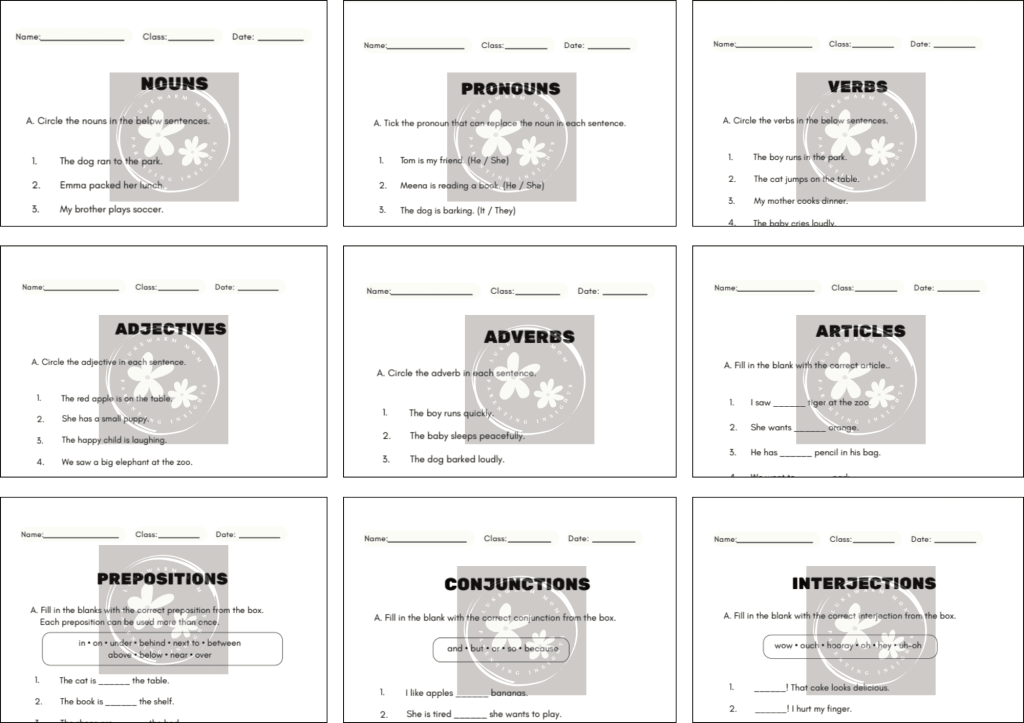
If you enjoyed these worksheets, you can download the complete Parts of Speech worksheet bundle with 18 printable worksheets for free. Just sign up below and we’ll send you access to the full bundle so your child can continue practicing grammar lessons.
Doing Words and Verbs
In beginner grammar lessons, verbs are often called doing words.
For example:
| Verb | Action |
|---|---|
| run | running |
| eat | eating |
| jump | jumping |
| play | playing |
If your child is learning verbs as doing words, you can also try these printable worksheets:
Doing Words Worksheets for Grade 1
These worksheets focus on recognizing simple action words in sentences.
Why Learning Verbs Is Important
Understanding verbs helps children:
- build complete sentences
- describe actions clearly
- improve reading and writing skills
- learn basic grammar concepts
Verbs are one of the first parts of speech children learn in elementary school.
Frequently Asked Questions (FAQs) – Verbs for Grade 1
What is a verb for Grade 1?
A verb is an action word. It tells us what someone or something is doing.
Examples: run, eat, jump, play
What are some examples of verbs for kids?
Here are some simple verb examples for Grade 1 students:
- run
- jump
- eat
- read
- write
- sing
These words show actions that people or things do every day.
How do you explain verbs to a child?
The easiest way is to say:
👉 “A verb is something you can do.”
You can also:
- Ask your child to act out words (run, clap, jump)
- Use pictures and ask, “What is happening?”
- Turn it into a game: “Find the action word!”
Why are verbs important for kids?
Verbs are important because:
- Every sentence needs a verb
- They help children speak and write clearly
- They improve understanding of sentences
What are action verbs?
Action verbs are words that show physical actions.
Examples:
- The dog runs
- She reads a book
- They play outside
Most Grade 1 worksheets focus on action verbs first
How can I teach verbs at home?
You can teach verbs using:
- Worksheets (like the ones in this post)
- Flashcards with actions
- Daily conversations (“What are you doing?”)
- Simple sentences (“I eat”, “She runs”)
Keep it fun and interactive for better learning.
What activities help kids learn verbs?
Try these easy activities:
- Circle the verb in a sentence
- Match action words with pictures
- Fill in the blank with the correct verb
- Act and guess the verb game
These are commonly used in Grade 1 worksheets to build understanding
At what age should kids learn verbs?
Most children start learning verbs in:
- Kindergarten (UKG) – basic exposure
- Grade 1 – identifying and using verbs in sentences
How many verbs should a Grade 1 child know?
There is no fixed number, but children should be familiar with:
- Common daily action words
- Basic verbs used in simple sentences
Focus on understanding rather than memorizing.
More Grade 1 Worksheets You May Like
- Nouns for Grade 1 — Fun Naming‑Words Worksheet + Free Printable PDF
- Learn Articles A, An, and The – Free Worksheets for Grade 1 Kids
- Prepositions for Grade 1 (With Simple Examples & Free Worksheets)
- Free Adverb Worksheets for Kids (Printable Grammar Practice)
- Sentence Structure Worksheets for Kids (Grade 1–5)
- Free Do and Does Subject-Verb Agreement Worksheets for Grade 1
- Have and Has Worksheets for Kids(Free Printable)
- Am, Is, and Are Helping Verbs for Grade 1
Learning verbs helps children understand how sentences are built. When children can identify actions and what is happening, they begin to form clearer and more meaningful sentences.
With simple practice and engaging activities like these worksheets, Grade 1 students can confidently
If you found this worksheet helpful, feel free to save it, print it, or share it with other parents and teachers.
Happy learning!
If you’re looking for more learning worksheets for early elementary children, you can explore our growing collection of skill-based practice resources designed for ages 5–8. From language and reading skills to simple math concepts, these worksheets are created to support gentle, stress-free learning at home.



Leave a Reply