

A noun is a naming word — it tells the name of a person, place, animal, or thing. In simple words, nouns are all around us! For Grade 1 learners, understanding nouns is one of the first steps in English grammar.
Kids already use nouns every day when they say words like boy, dog, school, or apple. A noun answers questions like “Who is it?” or “What is it?” — and that’s what makes it so important!
Explore our complete Parts of Speech Worksheets for more fun grammar practice activities including nouns, verbs, adjectives, pronouns, adverbs, articles, prepositions, and more for elementary learners.
Examples of Nouns for Grade 1 Kids
Here are some simple, age‑friendly examples:
- People: boy, girl, teacher, mother
- Animals: dog, cat, bird, elephant
- Places: school, park, home, zoo
- Things: book, ball, pencil, chair
Common Nouns vs. Proper Nouns (Grade 1)
When your child is learning nouns, it’s helpful to know that not all nouns are the same. Nouns can be divided into Common Nouns and Proper Nouns. Teaching this distinction early helps children read, write, and recognize names in everyday life.
Common Nouns
- These are general names for people, places, animals, or things.
- They don’t refer to a specific person, place, or thing — just a type of thing.
- Examples:
- People: boy, girl, teacher
- Animals: cat, dog, elephant
- Places: school, park, zoo
- Things: ball, book, chair
- Tip for Kids: Common nouns are all around us! They are words we can see, touch, and talk about every day.
Proper Nouns
- These are special names that refer to specific people, places, or things.
- Proper nouns always start with a capital letter.
- Examples:
- People: Emma, David, Mrs. Sharma
- Places: London, Central Park, India
- Animals/Pets: Charlie, Bella (names of pets)
- Things: Coca‑Cola, Barbie Doll (brand or special items)
- Tip for Kids: Ask, “Is this a unique name?” If yes, it’s a proper noun!
Download our free printable worksheets for Common and Proper Nouns here
How to Teach Nouns to Grade 1 Students
Teaching nouns to first graders should be hands on and visual. Try these fun ideas:
Circle the Noun
Give your child a short sentence and have them circle the noun. For example:
The cat drinks milk. → cat, milk are nouns.
Match Pictures to Words
Kids love images! Match pictures with noun words like dog, apple, school to help them see the connection.
Fill in the Blanks
Create simple sentences and let kids fill in the missing nouns:
“The ___ is in the park.” (e.g., boy, dog)
Free Printable Noun Worksheets (PDF)
Download and print these worksheets to practice identifying and using nouns at home or in the classroom:
Worksheet Activities Include:
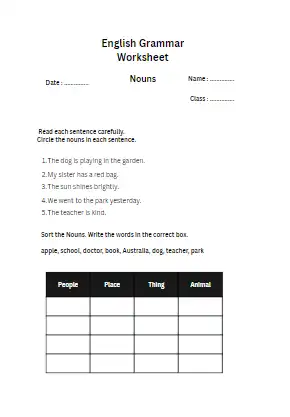
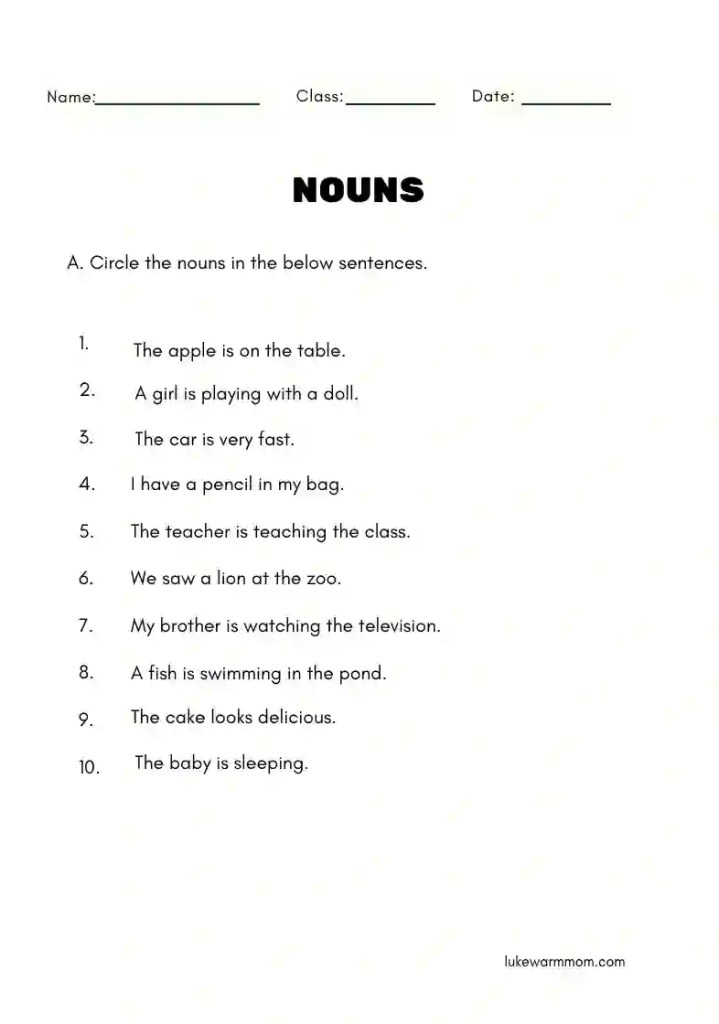
✔️ Circle the noun
✔️ Fill in the correct noun
✔️ Match words to pictures
✔️ Identify nouns in sentences
✔️ Write your own sentences using nouns

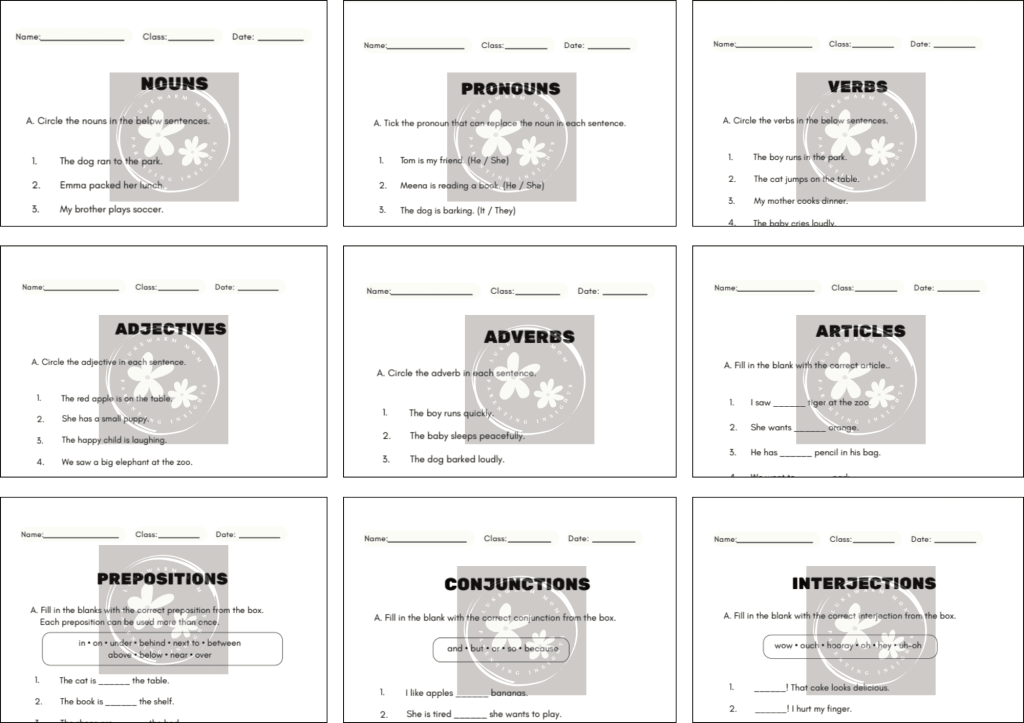
If you enjoyed these worksheets, you can download the complete Parts of Speech worksheet bundle with 18 printable worksheets for free. Just sign up below and we’ll send you access to the full bundle so your child can continue practicing grammar lessons.

Once your child is comfortable identifying common and proper nouns, they can move on to learning plural nouns with our Grade 2 Plural Noun Worksheets for more advanced practice.
Why Noun Practice Matters for Grade 1 Students
Learning nouns helps children:
- Expand vocabulary
- Build confidence in reading
- Understanding the structure of sentences
- Improve writing skills
Practicing nouns sets a strong foundation for future grammar lessons like verbs and adjectives.
Quick Parent/Teacher Tips
- Use everyday objects to show nouns in real life (e.g., cup, table, bag).
- Read short books and pause to name the people, places, and things.
- Praise effort and creativity to make learning fun!
Questions & Answers About Nouns for Grade 1
Q1: What is a noun?
A: A noun is a naming word. It names a person, place, animal, or thing. Examples: boy, dog, school, apple.
Q2: Why should my Grade 1 child learn nouns?
A: Learning nouns helps children build vocabulary, form sentences, and understand grammar. It also makes reading and writing easier and more fun.
Q3: How can I teach nouns to my child at home?
A: Use everyday objects, simple sentences, and fun games. Ask your child to identify nouns in sentences or match words to pictures. Encourage them to write their own short sentences with nouns.
Q4: What are examples of nouns my child can learn first?
A: Start with familiar, everyday nouns:
- People: mom, dad, teacher, friend
- Animals: cat, dog, bird, elephant
- Places: home, school, park, zoo
- Things: ball, book, chair, apple
Q5: Can nouns be singular and plural?
A: Yes! Singular nouns name one thing (apple), while plural nouns name more than one (apples). Teaching this helps kids understand counting and sentence structure.
Q6: Are nouns only in English lessons?
A: Not at all! Nouns appear in reading, writing, and speaking every day. Recognizing nouns helps kids describe their world and express themselves clearly.
More Grade 1 Worksheets You May Like
- Verbs for Grade 1 – Free Printable Action Verb Worksheets with Answers
- Learn Articles A, An, and The – Free Worksheets for Grade 1 Kids
- Prepositions for Grade 1 (With Simple Examples & Free Worksheets)
- Sentence Structure Worksheets for Kids (Grade 1–5)
- Free Adverb Worksheets for Kids (Printable Grammar Practice)
Learning nouns helps children understand how sentences are built. When children can identify people, places, animals, and things, they begin to form clearer and more meaningful sentences.
With simple practice and engaging activities like these worksheets, Grade 1 students can confidently
If you found this worksheet helpful, feel free to save it, print it, or share it with other parents and teachers.
Happy learning!
If you’re looking for more learning worksheets for early elementary children, you can explore our growing collection of skill-based practice resources designed for ages 5–8. From language and reading skills to simple math concepts, these worksheets are created to support gentle, stress-free learning at home.


Leave a Reply